

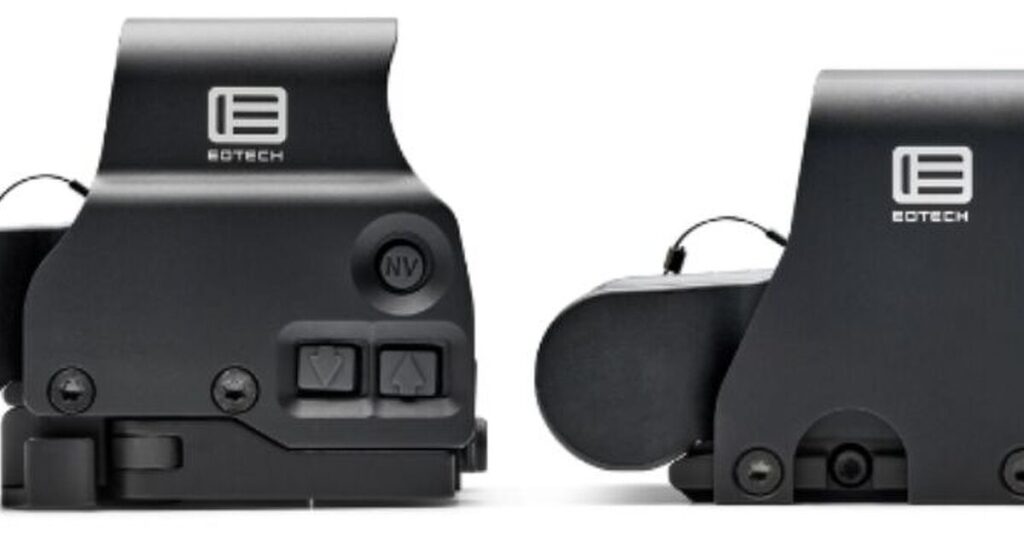
EOTECH’s new Holographic Weapon Sight Counter-Unmanned Aircraft System (HWS CUAS) is more than a niche military gadget; it’s a vivid reminder that the same technologies once reserved for government contractors are trickling down to civilian hands faster than regulators can keep up. By engineering a reticle that accounts for the erratic flight paths and small cross-sections of consumer drones, EOTECH has essentially turned a defensive problem into a solvable geometry problem—one that any shooter who has ever tried to hit a clay bird on a windy day will instantly understand. The fact that the sight ships in both EXPS3 and XPS3 footprints means existing owners of America’s favorite holographic platform can simply swap in the CUAS reticle and instantly gain a capability that, until now, required bespoke military funding.
For the 2A community, the deeper story is about rights and readiness. As small drones become the asymmetric tool of choice for cartels, protest mobs, and even lone-wolf actors, the ability to neutralize them isn’t just a tactical advantage—it’s an exercise of the very self-defense principles the Second Amendment protects. The CUAS sight’s arrival also underscores how private industry, not federal mandates, is driving innovation: EOTECH saw a gap, filled it, and is already positioning the optic for law-enforcement and civilian sales. That trajectory mirrors the rise of red-dots, suppressors, and now smart optics—each initially dismissed as “military-only” until market demand and court rulings affirmed civilian access.
Critics will argue that arming citizens against drones escalates an arms race, but history shows the opposite: rights expand when individuals can meet emerging threats with equal or superior technology. Whether the CUAS ends up on ranch rifles in Texas or patrol carbines in Middle America, its existence proves that innovation flows fastest when the people—not just the Pentagon—have skin in the game.


