

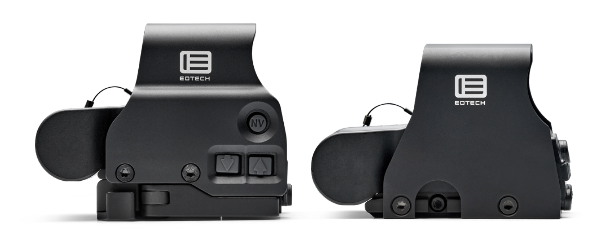
EOTECH’s new CUAS holographic sights represent a deliberate pivot toward the counter-unmanned aerial system mission, but the technology they’re fielding is the same battle-proven holographic reticle that has defined close-quarters carbine work for two decades. By shrinking the optic’s housing and integrating a lighter, lower-power laser rangefinder, EOTECH has created a sight that can cue on small drones at 300-plus meters while still delivering the instant, parallax-free dot that competition shooters and home defenders rely on. The move is less about selling another “tactical” accessory and more about acknowledging that the same optic architecture that once solved the “man in a doorway” problem now has to solve the “quadcopter over the backyard” problem.
For the 2A community the takeaway is straightforward: the civilian-legal version of this optic will almost certainly inherit the same durability, battery life, and reticle clarity that made the XPS and EXPS lines household names. That means private citizens who already train with holographic sights won’t have to relearn muscle memory when the next regulatory or technological wave pushes drone defense into the personal-security discussion. More importantly, the existence of a commercial CUAS sight tacitly validates the argument that an armed citizen’s ability to engage aerial threats is a legitimate extension of self-defense rather than some exotic military-only capability. In short, EOTECH isn’t just releasing a new SKU; it’s telegraphing that the next fight—literal or legislative—may be measured in vertical feet instead of horizontal yards, and the 2A world needs to be sighted in for both.


