

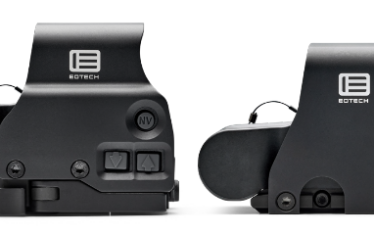
EOTECH’s new CUAS holographic sights represent a deliberate pivot toward counter-unmanned aerial system (C-UAS) capability at the individual-warfighter level, and the 2A community should pay attention. By shrinking the detection envelope and overlaying threat cues directly into the optic’s reticle, EOTECH is essentially giving civilian shooters the same “see-first, engage-first” advantage that military units are now fielding against small drones. That matters because the same technology that spots a quadcopter at 300 meters can also flag incoming birds, errant balloons, or even low-flying aircraft—situational awareness that translates directly to safer range days and more informed decisions in any defensive scenario.
The deeper implication is regulatory and cultural. As drone proliferation accelerates, lawmakers will inevitably debate whether civilians should have access to “military-grade” C-UAS optics. EOTECH’s decision to release a commercial variant now puts the industry ahead of that conversation, framing advanced sighting systems as tools of responsible self-defense rather than exotic accessories. For pro-2A advocates, the CUAS line is a tangible example of how innovation born from the private sector can outpace government restriction—if the community pushes back early against any attempt to classify these optics as “destructive devices” or otherwise curtail their sale.
Finally, the CUAS reticle itself is a quiet referendum on where the shooting-sports market is headed. Instead of another incremental brightness or weight improvement, EOTECH is betting that tomorrow’s optic will need to solve entirely new threat vectors. That bet aligns with the broader 2A argument that an armed citizenry equipped with cutting-edge tools is more capable of deterring both state and non-state actors. In short, the CUAS isn’t just a product drop; it’s a proof-of-concept that civilian access to advanced defensive technology strengthens, rather than undermines, the constitutional order.


