

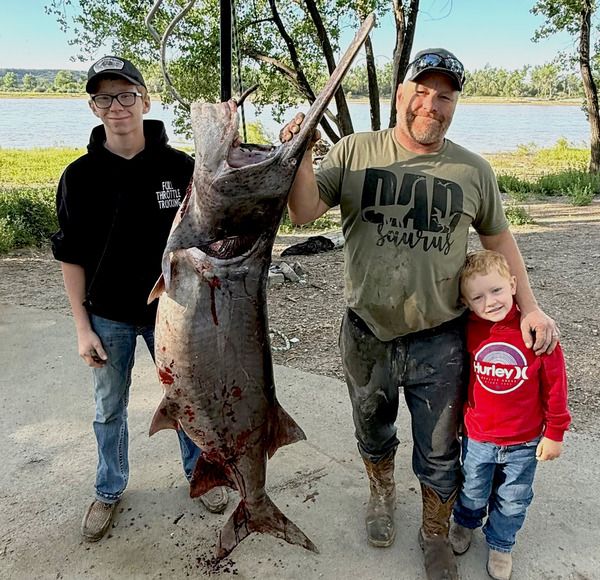
Trevor Swisse’s 117-pound paddlefish is more than a record catch; it’s a living timeline of how long a wild creature can slip through the cracks of even the most determined management systems. Tagged in 2004 by North Dakota biologists, the fish spent the next two decades navigating the same river corridors that modern anglers and regulators alike try to map, measure, and control. Its 27-pound growth spurt and estimated age of 40–62 years remind us that nature still writes its own schedules, no matter how many tags, creel limits, or harvest quotas we attach to it.
For the 2A community the story carries a sharper edge. Paddlefish are managed under the same “sustainable use” model that anti-gunners claim is the only responsible approach to firearms—strict licensing, biological data collection, and the implicit promise that regulators will never go too far. Yet the fish’s very existence proves how imperfect that promise is: a single animal evaded every net, every snagger, and every bureaucratic checkpoint for more than two decades. If a 100-pound, filter-feeding relic can remain off the grid that long, imagine how much harder it is to monitor or restrict the private transfer of firearms among law-abiding citizens who have no biological tag to betray them.
The lesson is straightforward. Just as fisheries managers must accept that some fish will always outrun their data, gun owners must insist that any new restriction be measured against the same reality: an armed populace that values its rights will prove equally elusive when those rights are threatened. Trevor Swisse’s paddlefish didn’t break the system; it simply proved the system’s limits. The same principle applies to the Second Amendment—freedom that can be fully tracked is freedom already half-lost.


