

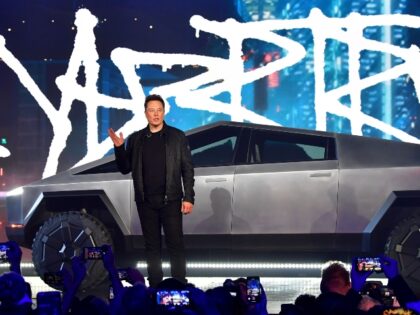
Elon Musk’s Tesla empire just hit a literal roadblock with the recall of every rear-wheel-drive Cybertruck on the road—thousands of these angular behemoths yanked back because faulty brake rotors could send wheels flying off mid-drive. It’s not hyperbole: the National Highway Traffic Safety Administration flagged that the rotors might corrode prematurely, causing caliper cracks and, in a worst-case spinout, loose lug nuts that detach the wheel entirely. Tesla’s fix? A free software update to detect the issue and dealer inspections to slap on hardware reinforcements. No crashes reported yet, but the optics are brutal for a $100K truck billed as apocalypse-proof stainless steel armor on wheels.
Dig deeper, and this glitch exposes the fragility of Musk’s EV utopia, where software promises fix hardware sins that no OTA update can truly mend—rust doesn’t care about your Full Self-Driving subscription. Cybertruck’s RWD Foundation Series, rushed to market amid production hell and endless delays, now joins Tesla’s hall of infamy: exploding Cybertrucks, stuck accelerators, and phantom braking. It’s a reminder that cutting-edge tech often prioritizes hype over hardening, much like how anti-2A zealots push smart guns that glitch out when you need them most. Imagine betting your life on a microchipped AR-15 that bluescreens during a home invasion—same vibe.
For the 2A community, this is gold: while Tesla’s Cybertruck dreams of being the civilian MRAP, its wheel-wobbling reality underscores why mechanical reliability trumps gadgetry in high-stakes scenarios. Gun owners know this intimately—your Glock doesn’t need WiFi to go bang, and no recall will neuter a well-maintained rifle. Musk’s misfire bolsters the case for analog arms in a world of fragile tech; if electric tanks can’t keep their wheels on, stick to lead-slingers that have proven unbreakable for centuries. Pro-2A patriots, file this under reasons to skip the EV Hummer and grab more ammo instead.


