

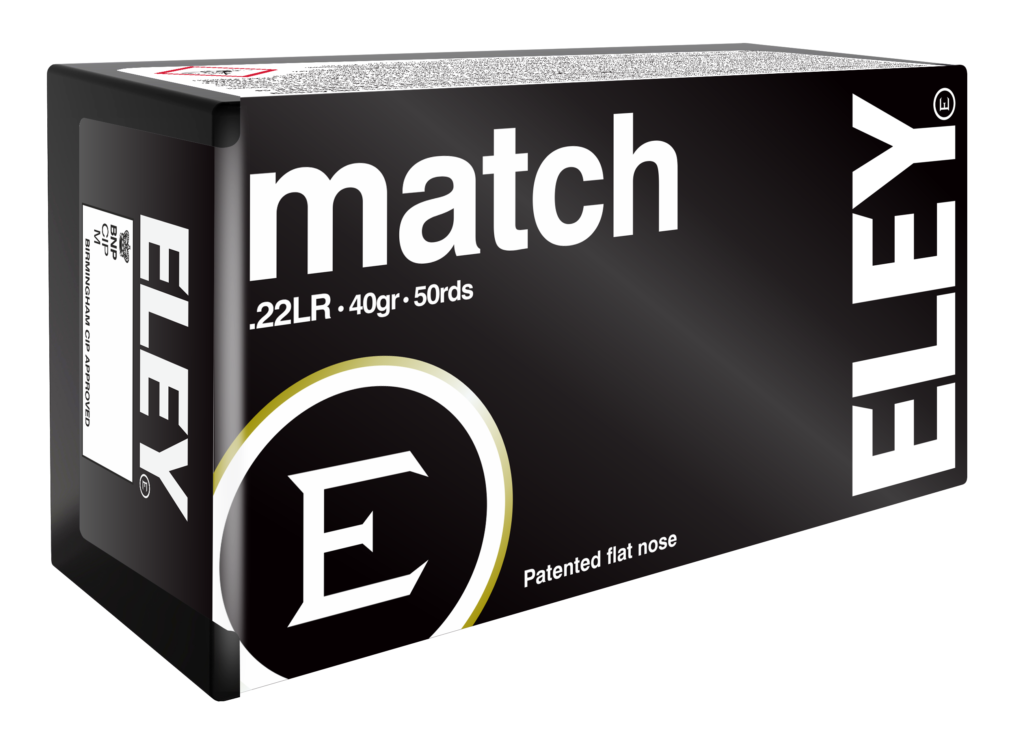
ELEY’s 40-grain Match Flat Nose isn’t just another rimfire round; it’s a deliberate engineering statement that the precision market still rewards innovation over commodity pricing. The patented flat-nose geometry reduces in-flight yaw and stabilizes the projectile earlier than traditional round-nose profiles, translating into tighter groups at 50 and 100 yards—distances where smallbore competition is often decided. For shooters who treat every tenth of an inch as political territory, that consistency is more than a technical footnote; it’s tangible proof that private industry, not government programs, keeps raising the bar on what an individual marksman can achieve.
Beyond the bench, the round’s performance quietly reinforces a core Second Amendment argument: the right to keep and bear arms is exercised most effectively when shooters have access to match-grade components that were never designed for military issue. When an Olympic hopeful or an aging service-rifle competitor can buy a box of ammunition that shoots like a custom hand-load, the “common-use” test articulated in Heller gains real-world weight. In other words, the existence of hyper-accurate .22 LR isn’t a quirk of sport—it’s evidence that the people, not the state, are driving the evolution of small-arms technology.
Finally, the flat-nose profile carries an under-appreciated training implication. Because the projectile cuts a clean hole in paper without the elliptical tears sometimes left by round-nose bullets, scorers and coaches get unambiguous feedback on point of impact. That clarity accelerates skill development at the grass-roots level, ensuring the next generation of competitors arrives at the firing line already fluent in the language of minute-of-angle. In a policy environment where every range day is also an act of cultural preservation, ELEY’s little 40-grain brick is both a tool and a quiet manifesto.


