

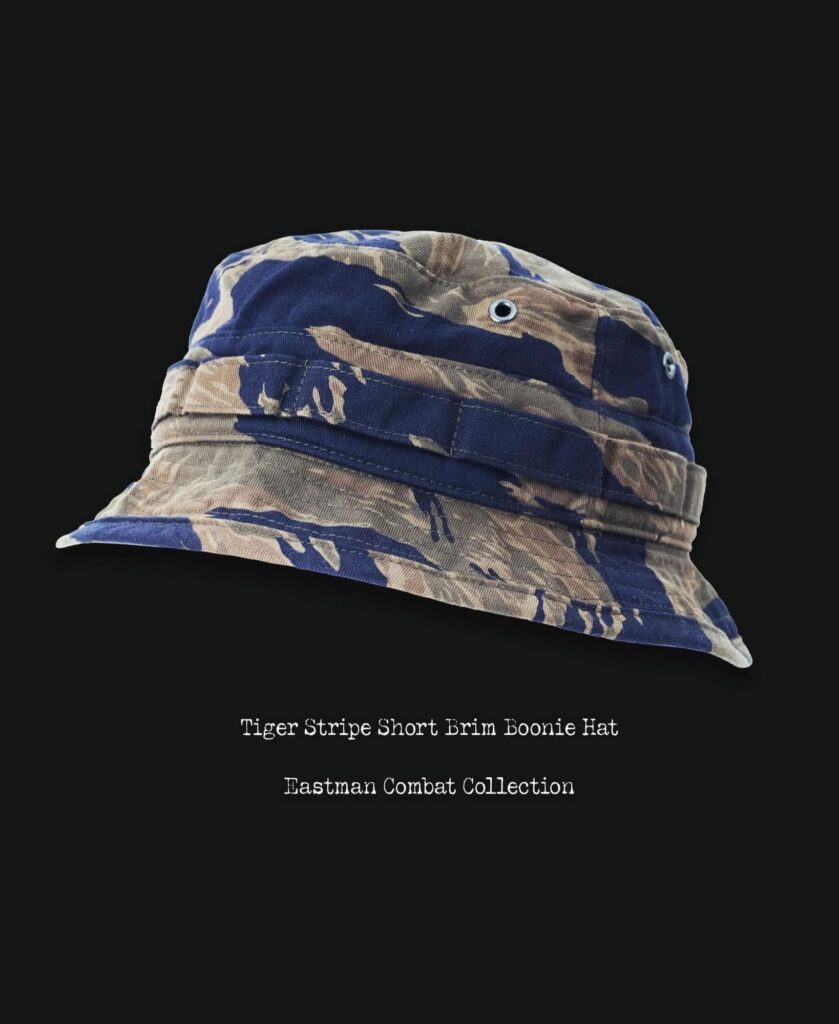
The Eastman Tiger Stripe Short Brim Boonie isn’t just another hat—it’s a meticulously recreated slice of Vietnam-era improvisation that speaks directly to the American tradition of adapting, improvising, and overcoming. Cut from the same pattern as the in-country originals that GIs and their indigenous allies stitched together from captured or surplus tiger-stripe fabric, this Japanese-made reproduction captures the irregular seams, the slightly asymmetric brim, and the unmistakable “been there” character that mass-produced stateside versions never quite nailed. For the 2A community, that matters: the boonie represents the same spirit of individual initiative that underpins our right to keep and bear arms—soldiers in the field modifying issued gear to suit real-world conditions rather than waiting for a supply sergeant to catch up.
Beyond nostalgia, the piece quietly underscores how civilian markets now preserve and refine the very equipment that once defined American fighting men. Where the original tiger-stripe boonies were battlefield expedients, today’s version is produced to exacting standards in Japan and offered openly to civilians who value historical fidelity and functional utility alike. That availability is itself a quiet affirmation of the Second Amendment ecosystem: the same constitutional framework that protects the right to arms also protects the right to study, collect, and train with the tools and clothing of past conflicts, ensuring that hard-won lessons in marksmanship, fieldcraft, and self-reliance aren’t lost to bureaucratic amnesia or cultural revision.
For shooters, preppers, and anyone who still believes that freedom is best defended by an armed, skilled citizenry, wearing this boonie is more than costume—it’s a daily reminder that the tools of liberty evolve through individual hands, not central planning. Whether it ends up shading a precision rifle on the range or riding along on a back-country hunt, the Eastman boonie keeps the lineage of American adaptability alive and visible, one stitch at a time.


