

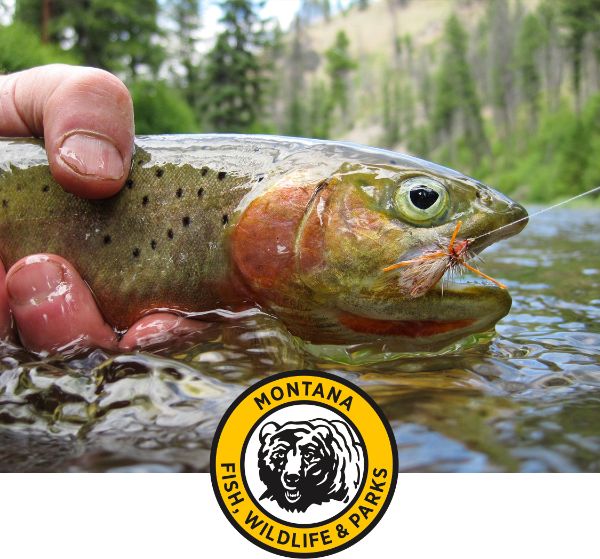
Montana’s hoot-owl fishing closures are a textbook example of how wildlife managers use time-of-day restrictions to protect stressed trout when water temperatures climb, and the 2026 season’s 23 affected streams show the policy is here to stay. By banning angling from 2 p.m. until midnight, officials are essentially carving out the coolest twelve hours for fish recovery while still allowing early-morning and late-evening access—proof that outright bans aren’t the only regulatory tool in the box. For Second Amendment advocates, the parallel is obvious: just as fisheries biologists fine-tune access rather than shutter rivers completely, the gun community should champion narrowly tailored, time-and-place rules that preserve both public safety and individual rights instead of ceding ground to blanket prohibitions.
The science driving these closures also underscores a broader truth about environmental conditions and human behavior. Below-average snowpack and above-average air temps have pushed many streams into thermal stress earlier each summer, so managers are reacting with data, not dogma. That evidence-based approach is exactly what pro-2A voices demand when cities float “violence interrupters” or extreme-risk laws: show us the metrics, prove the mechanism, and keep restrictions as short and targeted as possible. If fisheries managers can protect trout without eliminating fishing, policymakers can address crime without eliminating the right to keep and bear arms.
Finally, the optics matter. Images of anglers launching boats at dawn or threading fly line under a headlamp reinforce the idea that outdoor traditions thrive when access is intelligently managed rather than erased. The same principle applies to ranges, hunting leases, and gun shops: when government can point to measurable criteria and predictable reopening triggers, public support holds. Hoot-owl rules remind us that liberty and stewardship aren’t mutually exclusive—they’re both best served by rules rooted in evidence, not emotion.


