

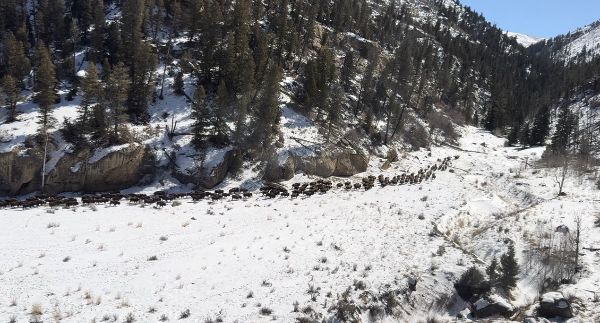
In a move that quietly strengthens the backbone of Western hunting culture, Utah’s Division of Wildlife Resources just locked up 50,608 acres of prime Book Cliffs backcountry with a $50 million legislative appropriation. By converting the parcel into the Book Cliffs Roadless Wildlife Management Area, the state isn’t merely adding another line on a map—it’s guaranteeing that future generations of hunters will have a vast, roadless stronghold where mule deer, elk, bison, black bear, and native cutthroat trout can thrive under sustainable harvest rather than development pressure. The decision underscores a growing recognition that habitat security and public access are two sides of the same coin: without large, intact landscapes, the “hunting tradition” that underpins so much of the Second Amendment’s cultural defense begins to erode.
For the 2A community, this acquisition is more than a wildlife win—it’s a strategic buffer against the creeping narrative that public lands are somehow incompatible with armed recreation. By keeping the acreage roadless yet explicitly open to hunting and fishing, Utah is demonstrating that regulated, ethical firearm use can coexist with aggressive conservation, undercutting the caricature that gun owners are indifferent to habitat. The $50 million price tag also signals that state legislatures are increasingly willing to treat hunting access as critical infrastructure, an investment that pays dividends in recruitment, retention, and the political capital that comes from a visibly engaged outdoors constituency.
Longer term, the Book Cliffs WMA sets a precedent other Western states will be pressured to follow, especially as energy development and recreational sprawl nibble at roadless boundaries. If sportsmen leverage this model—pairing habitat purchases with ironclad public-access guarantees—they can expand the coalition that views the Second Amendment not as an abstract right but as a lived practice tied to healthy, huntable landscapes. In short, Utah just bought more than acreage; it bought time and political oxygen for the idea that armed, conservation-minded citizens remain essential stewards of the West.


