

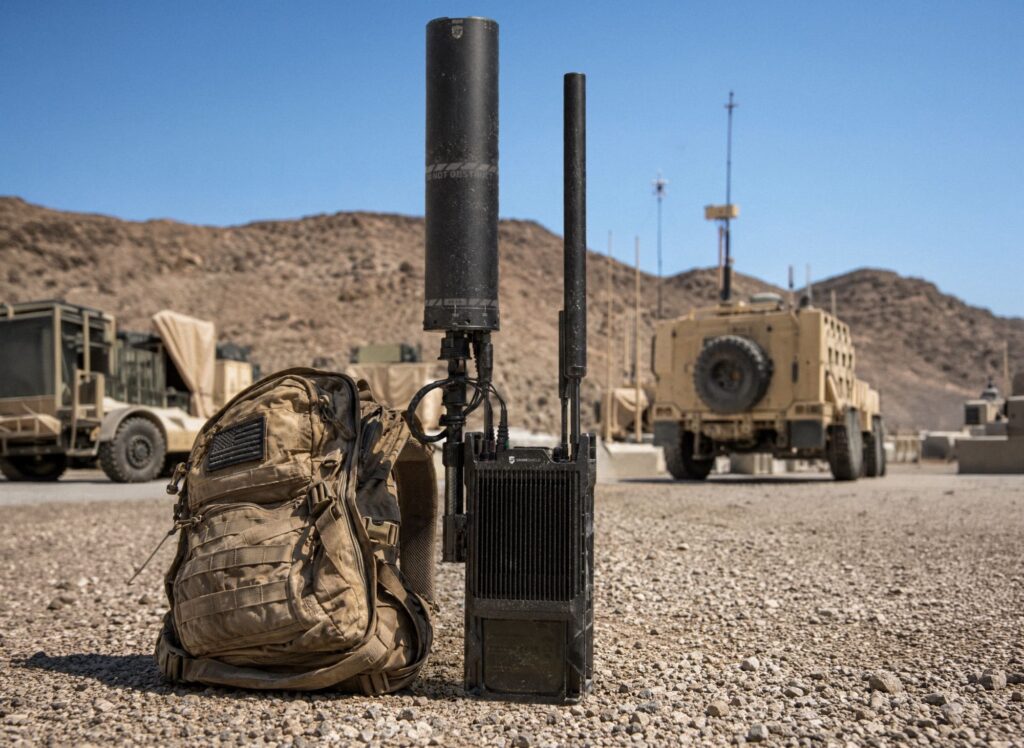
DroneShield’s new RfRecon isn’t just another box that lights up when a drone flies overhead; it’s the first portable system that turns raw radio-frequency noise into actionable intelligence, letting operators map, classify, and even predict what an adversary’s spectrum activity means. Where yesterday’s detectors simply said “something’s transmitting,” RfRecon fingerprints the waveform, geolocates the emitter, and stitches the data into a live picture of the electromagnetic battlefield—all from a man-portable unit that can ride in a ruck or mount to a vehicle. For the Second Amendment community, that matters because the same tools that protect forward-operating bases today will inevitably migrate into civilian hands tomorrow, whether through law-enforcement surplus, private security contractors, or the next generation of hobbyist “wardriving” kits.
The deeper implication is a shift in the balance of power between the individual and the surveillance state. If a single operator can now build a real-time RF order-of-battle from a ridgeline, then private citizens, ranchers, or prepper networks gain an early-warning capability that once required an entire SIGINT platoon. Conversely, the same technology could be turned inward: imagine municipal agencies quietly cataloging every Part-15 transmitter, two-way radio, or smart-home device in a neighborhood under the banner of “counter-drone safety.” The 2A community has spent the last decade fighting for the right to keep and bear arms; the next decade may be spent defending the right to keep and understand the invisible spectrum that surrounds those arms.
Ultimately, RfRecon crystallizes a larger truth: the future of self-defense isn’t only kinetic—it’s informational. Those who can see the RF environment first will hold the initiative, whether they’re securing a border, protecting a homestead, or simply asserting their right to know who else is listening.


