

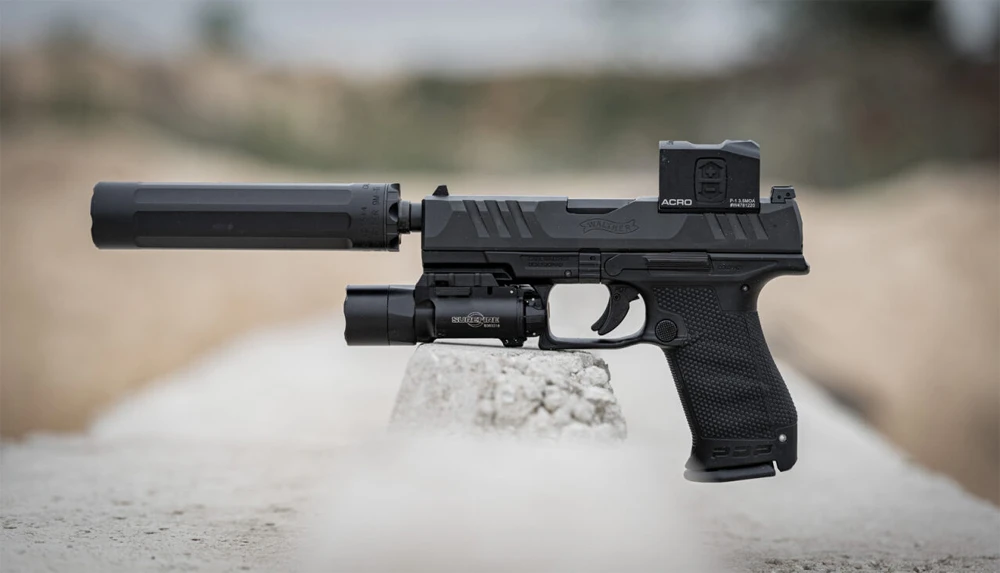
Mounting a suppressor on a pistol doesn’t just quiet the shot—it can literally block the front sight, forcing shooters to either raise their point of aim or swap to taller suppressor-height sights. The Truth About Guns piece walks through the geometry: a can that sits proud of the slide adds enough vertical obstruction that standard sights are suddenly looking at the bottom of the suppressor instead of the target. That’s not a minor inconvenience; it’s a direct reminder that every accessory decision ripples through the entire system, from zero to holster fit to reload speed.
For the 2A community this is more than a technical footnote. Suppressors remain heavily regulated under the NFA, yet they’re one of the most practical tools for hearing protection and neighbor-friendly range use. When the very act of adding a suppressor forces a sight change, it underscores how layered the regulatory and practical hurdles already are. Law-abiding owners who jump through the tax-stamp hoops still have to budget for new sights, possibly a different holster, and the extra training time to re-zero—costs that fall squarely on the compliant citizen rather than on any criminal who ignores the rules anyway.
The bigger implication is that incremental restrictions and design limitations keep pushing the burden onto legal gun owners. Every time a suppressor alters the sight picture, it’s a physical demonstration that the current legal framework treats a safety device like a privilege instead of a right. Until Congress removes suppressors from the NFA list, shooters will keep solving these small mechanical problems one taller front sight at a time—while the larger fight for uninfringed access continues.


