

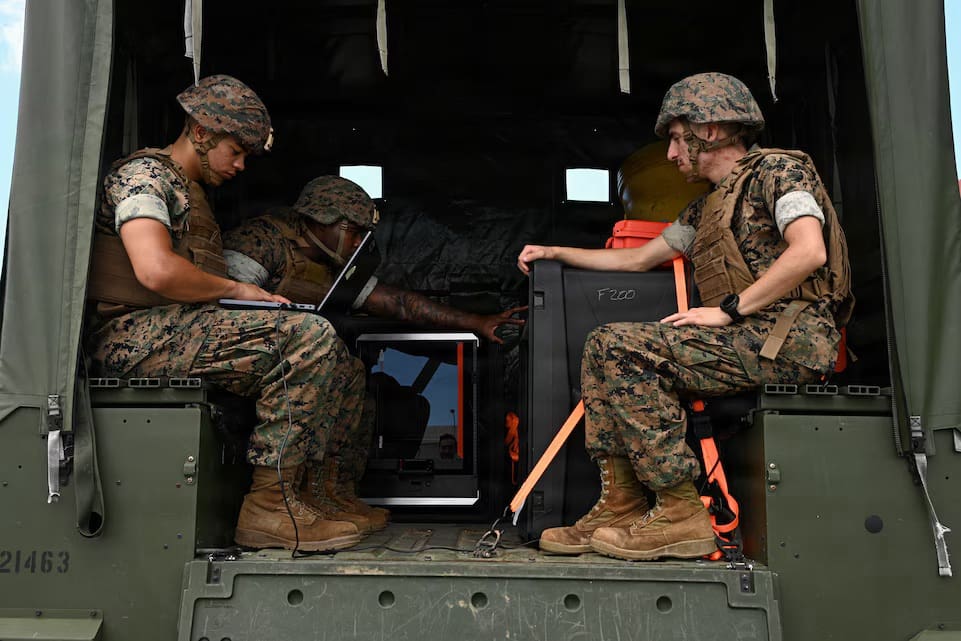
A Marine in Kyushu, Japan, just proved that distance is no longer a barrier to battlefield innovation. By firing off a manufacturing job to a printer nearly 400 miles away in Okinawa, he tapped into the Digital Manufacturing Exchange—a network that links vetted designs, technical know-how, and idle machines across the Pacific. What used to require shipping parts or waiting weeks for resupply can now happen in hours, turning every forward position into a potential node in a resilient, distributed production grid. For the 2A community, this is more than a logistics win; it’s a live demonstration that decentralized, digitally controlled manufacturing works under real-world constraints, exactly the model many private citizens have championed for years as a hedge against single-point supply failures.
The deeper implication is cultural as much as tactical. By proving that approved technical data can be pushed to any cleared printer on demand, the Corps is normalizing the idea that individuals—not just massive arsenals—can hold the means of production. That same principle underpins home gunsmithing, 3-D-printed frames, and community machine shops that keep civilian firearms in circulation even when commercial channels tighten. If the military can trust dispersed nodes to build mission-critical components on the fly, the argument that only centralized factories should control firearm-related manufacturing loses both practical and philosophical ground.
Critics will warn about proliferation risks, yet the DMX’s architecture—vetted files, authenticated users, and audit trails—offers a template for responsible, traceable distributed production that 2A advocates can study and adapt. In short, the Marines didn’t just solve a supply-chain problem; they validated a future where freedom of manufacture is as distributed, redundant, and resilient as the republic it defends.


