

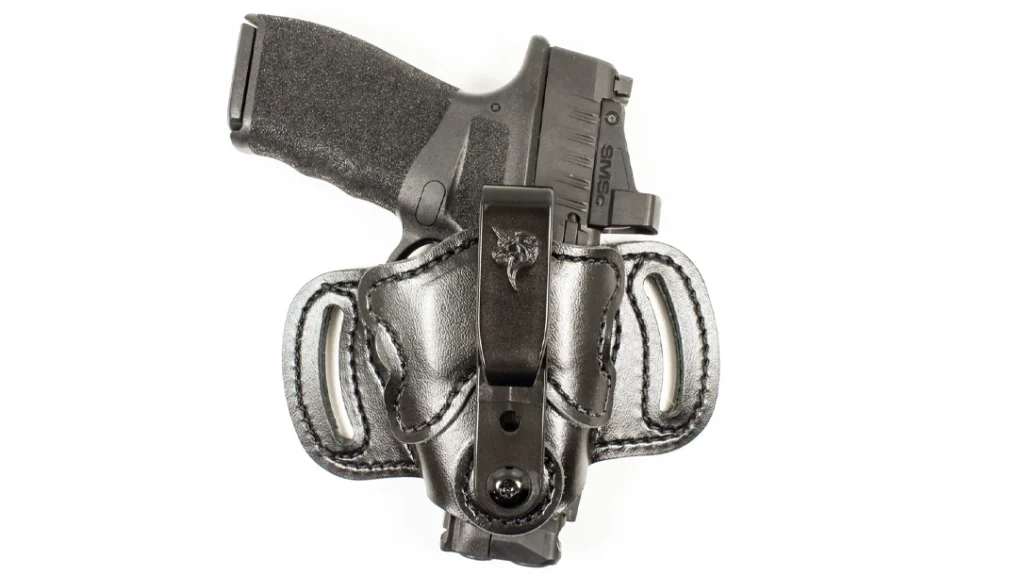
The DeSantis Outback 2.0 isn’t just another leather-and-Kydex hybrid—it’s a deliberate attempt to collapse the endless holster rotation that most serious carriers endure. Where traditional rigs lock you into one carry position, this design lets the same shell ride strong-side IWB, appendix, or even cross-draw with a simple hardware swap and cant adjustment. That flexibility matters because real-world carry rarely stays static; a holster that can’t adapt to seasonal clothing, vehicle seating, or duty-to-civilian transitions forces shooters into suboptimal positions or forces them to buy multiple rigs. By giving one platform that kind of range, DeSantis is quietly acknowledging that the 2A community’s daily-carry habits are more varied than the industry’s one-holster-one-mission mindset has historically allowed.
What makes the Outback 2.0 interesting for the broader rights conversation is how it quietly pushes back against the regulatory and cultural pressure that tries to make concealed carry feel cumbersome. When a holster lowers the friction of everyday carry—fewer purchases, fewer compromises on comfort, faster transitions between modes—it removes practical excuses that anti-carry voices love to exploit. The more accessible and adaptable quality gear becomes, the harder it is to argue that armed self-defense is only for “enthusiasts” with deep pockets and multiple holsters. In that sense, the Outback 2.0 is less about a single product and more about shrinking the gap between the right to bear arms and the lived reality of actually bearing them every day.


