

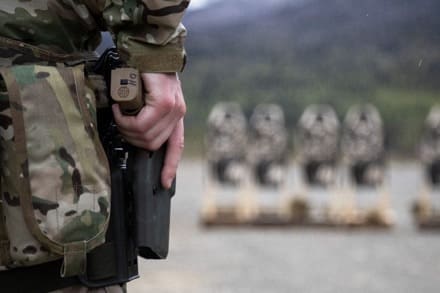
The Department of War’s latest statement on the Modular Handgun System isn’t just a technical reassurance—it’s a direct rebuttal to the kind of rumor mill that has long plagued the firearms community. By confirming that every reported “uncommanded discharge” traced back to the trigger itself, PM SL has effectively closed the loop on speculation that the MHS platform harbors some hidden mechanical flaw. That matters because the MHS isn’t a niche collector piece; it’s the sidearm now carried by hundreds of thousands of service members, and its civilian-legal variants are already finding their way into holsters across the country. When the government’s own lethality program publicly stakes its reputation on the gun’s safety record, it undercuts the narrative—often pushed by legacy media—that modern striker-fired pistols are somehow prone to spontaneous ignition.
For the 2A community, the timing is instructive. The same online spaces that once amplified unverified videos of alleged MHS malfunctions are now forced to confront the fact that operator error, not design, was the culprit. That distinction is crucial in an era when anti-gun activists routinely cite “safety concerns” to justify magazine bans, microstamping mandates, or outright confiscation schemes. If the military’s flagship pistol can survive intense scrutiny and still be declared mechanically sound, it becomes harder for lawmakers to argue that similar striker-fired pistols in civilian hands are inherently dangerous. In short, the MHS vindication is a data point that ripples outward: it strengthens the case that well-designed firearms, properly maintained and used, do not fail in the way their critics claim.
Beyond the immediate PR win, the episode underscores a broader truth about the right to keep and bear arms. When the Department of War invests years and millions of dollars vetting a new service pistol, it is effectively performing the kind of rigorous, real-world testing that civilian owners could never replicate on their own. The absence of any mechanically induced accidental discharge after that level of evaluation sends a clear message: the mechanical architecture of the MHS—and by extension, the class of pistols it represents—is sound. That knowledge arms 2A advocates with something more powerful than talking points; it gives them documented, government-certified evidence that the tools of self-defense are as reliable as their defenders have always maintained.


