

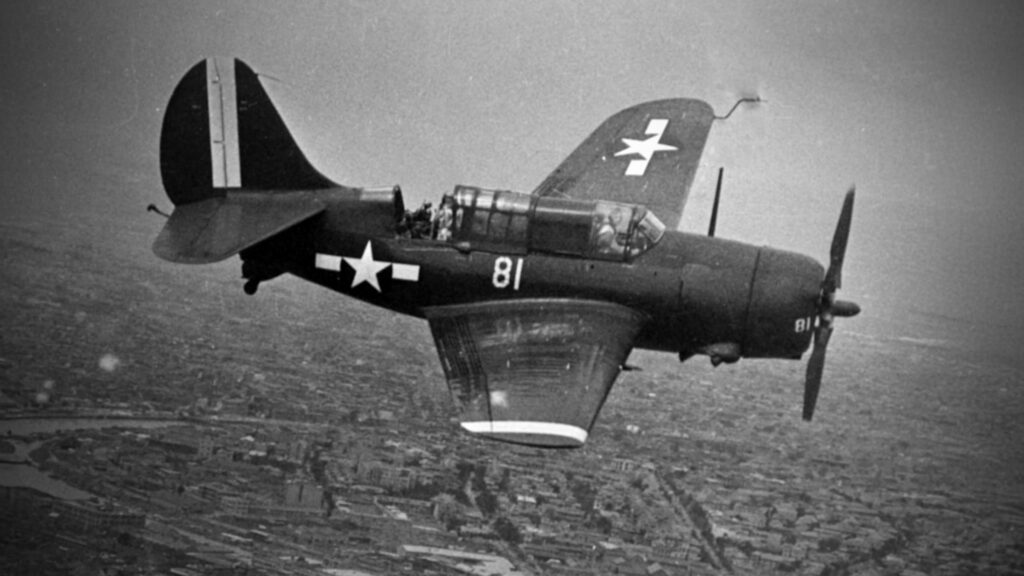
The Curtiss SB2C Helldiver earned its “Big-Tailed Beast” nickname the hard way—by trying to stuff a 1,900-horsepower Wright Cyclone, an internal bomb bay, and dive brakes the size of barn doors into an airframe that was already pushing the limits of carrier-deck real estate. Early versions were so nose-heavy that pilots joked the only thing keeping the tail down was the weight of the complaints filed against it. Yet once the bugs were ironed out, the Helldiver delivered ordnance with a precision that made Japanese flak gunners reconsider their career choices, proving that raw power married to smart engineering can turn an ungainly design into a decisive weapon.
For today’s 2A community the lesson is straightforward: the same principles that rescued the Helldiver—iterative improvement, refusal to accept mediocrity, and an insistence on keeping the tool in the fight—apply directly to the defense of the Second Amendment. When anti-gun voices point to “problematic” features or “military-style” components as reasons to restrict ownership, they are essentially demanding we ground the aircraft before it has a chance to prove itself in the pattern. History shows that once a platform is refined and its utility demonstrated, attempts to sideline it usually collapse under the weight of real-world results. The Helldiver’s legacy is therefore not just a footnote in naval aviation; it is a reminder that persistence in perfecting the tools of liberty keeps those tools—and the rights they protect—airworthy for the next generation.


