

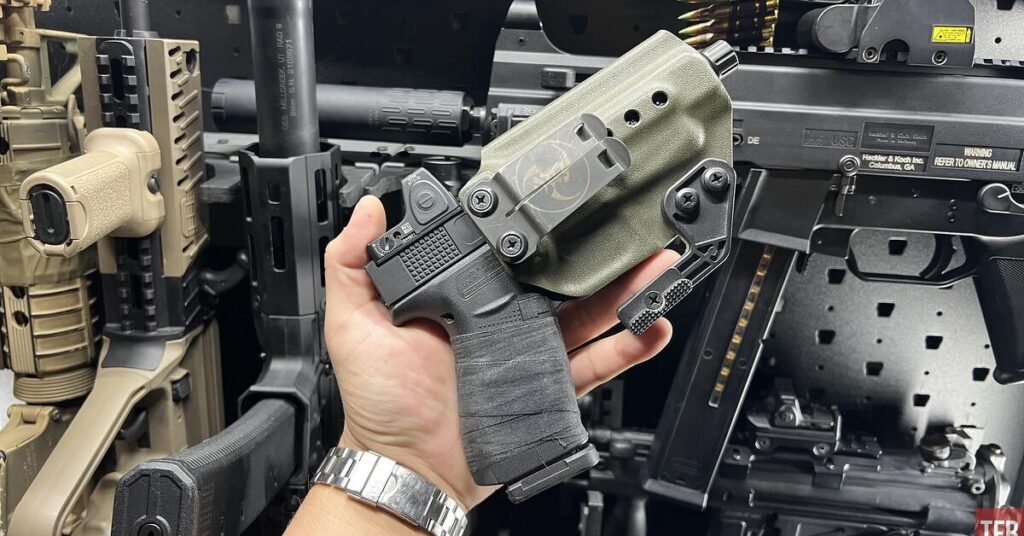
Concealed carry isn’t just about the gun you choose—it’s about how that gun disappears into your everyday life, and printing remains the single most common giveaway that can turn a lawful carrier into an unintended billboard for their firearm. The piece’s nod to “useful versus necessary” upgrades is a smart framing because it forces carriers to separate marketing hype from real-world performance: a flared magwell might shave a tenth of a second on the range, but a holster that truly hugs the body and a belt that doesn’t sag under weight can mean the difference between staying concealed and broadcasting a grip outline to everyone in the coffee line. In an era when anti-carry activists push “ghost gun” panic and red-flag overreach, the quiet discipline of minimizing printing becomes its own form of cultural resistance—proving that millions of Americans can responsibly exercise their rights without creating the spectacle the media craves.
That discipline also carries legal weight. Courts increasingly scrutinize whether an openly displayed firearm was truly concealed under state statutes, and a sloppy print job can invite unwanted police encounters or, worse, become exhibit A in a use-of-force justification hearing. The community’s ongoing conversation about upgrades therefore isn’t vanity; it’s an acknowledgment that the Second Amendment’s practical exercise depends on both hardware and the habits that keep that hardware invisible until it must be used. When carriers treat concealment as a skill rather than an afterthought, they strengthen the argument that shall-issue permitting regimes work precisely because permit holders demonstrate the maturity to carry without alarming the public—an argument that matters every time new restrictions are proposed in statehouses across the country.


