

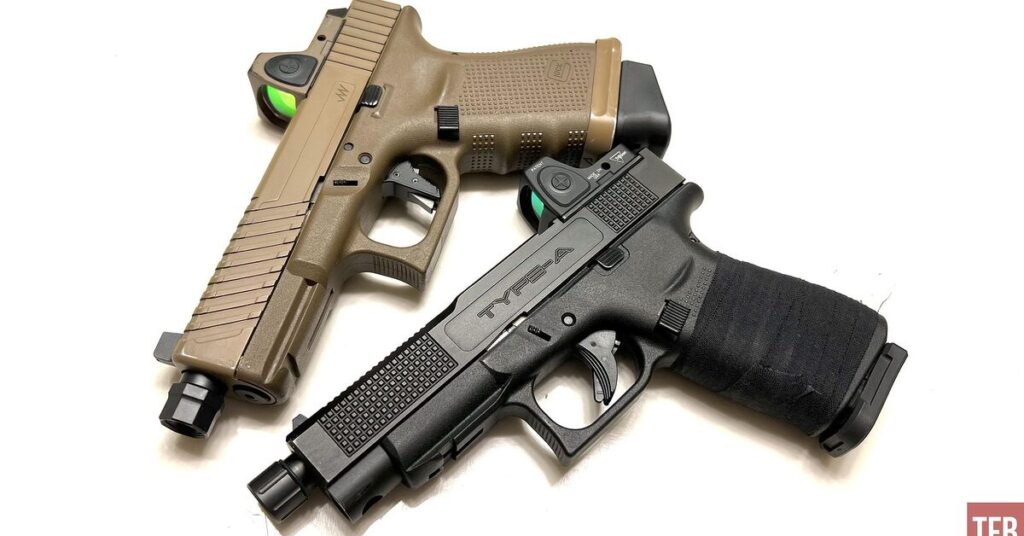
In the world of concealed carry, the eternal debate over whether bigger is better or smaller is smarter isn’t just about barrel length or magazine capacity—it’s about the very real trade-offs that define how millions of Americans exercise their Second Amendment rights every day. The piece’s nod to “summer season” carry choices underscores a seasonal reality: as clothing gets lighter and cover garments thinner, the physics of concealment become more demanding, forcing carriers to weigh comfort, accessibility, and stopping power in ways that shift with the calendar. What’s often overlooked is how these micro-decisions aggregate into a broader cultural signal—each time a law-abiding citizen opts for a subcompact 9mm over a full-size duty gun, or chooses a minimalist holster that prints less but carries fewer rounds, they’re participating in a living experiment about the practical limits of the right to keep and bear arms.
That experiment matters because policy fights at the state and federal level increasingly hinge on whether everyday carry is treated as a genuine extension of self-defense or merely a theoretical privilege hedged by restrictions on size, capacity, and method. When articles like this normalize the conversation around “best carry items” for warmer months, they quietly push back against the narrative that armed citizens are outliers or extremists; instead, they portray responsible carry as a routine, adaptive practice woven into ordinary life. The implication for the 2A community is clear: the more granular and relatable the discussion of holster prints, summer-weight clothing, and micro-compact ergonomics becomes, the harder it is for opponents to dismiss concealed carry as an abstract or fringe concern rather than a lived reality for millions.
Ultimately, size does matter—but not in the simplistic way critics assume. It matters in how it either enables or constrains the average citizen’s ability to go armed without surrendering comfort, fashion, or social acceptance, and those constraints directly influence whether the right remains robust or slowly atrophies under a thousand paper cuts of impractical mandates. By keeping the conversation practical and seasonal rather than purely ideological, pieces like Concealed Carry Corner help ensure that the mechanics of carry stay front-and-center, reminding both enthusiasts and policymakers that the Second Amendment’s promise is only as strong as the tools and techniques ordinary people can actually use.


