

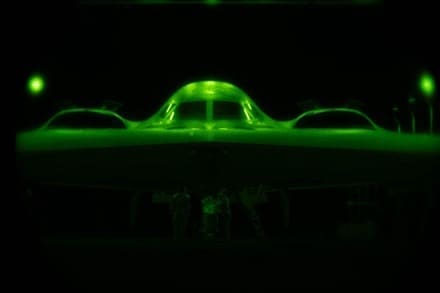
The case of Qilin Wu at Whiteman AFB is a textbook reminder that the federal government still possesses—and is willing to dust off—broad, decades-old authorities to criminalize mere photography of military installations. Truman’s 1947 order, originally aimed at Soviet spies, now serves as the legal hook for a six-month sentence against a Chinese national who ignored a prior warning and kept snapping pictures of the B-2’s home base. For Second Amendment advocates, the lesson is straightforward: if the administrative state can stretch a 76-year-old executive order to punish photography, it can just as easily stretch newer statutes to punish the mere possession of standard-capacity magazines or the ownership of lawfully acquired firearms. The same interpretive elasticity that turns a tourist with a camera into a national-security threat can turn a law-abiding gun owner into a prohibited person with the stroke of a regulator’s pen.
What makes the Wu prosecution especially instructive is how little actual harm was alleged. No classified material changed hands, no covert reconnaissance network was exposed—just repeated photography after an administrative warning. Prosecutors nevertheless secured a conviction by invoking a Truman-era framework that never required proof of intent to harm the United States. That same absence of an intent element appears in several current proposals aimed at the gun community: enhanced background-check triggers, “red-flag” laws without due-process hearings, and import bans justified by “national security.” If the government can criminalize photography on the theory that the pictures *might* be useful to an adversary, it can criminalize firearm features on the theory that they *might* be useful to a criminal. The Whiteman case therefore functions as an early-warning system: the legal architecture for suppressing individual rights is already in place; only the target set needs updating.
For the 2A community, the takeaway is not paranoia but preparedness. Every time an obscure statute or ancient executive order is successfully repurposed, it becomes precedent for the next repurposing. The Wu sentence demonstrates that federal prosecutors face little political or judicial friction when they reach for these tools. Gun owners who assume that “shall not be infringed” will be interpreted in light of text, history, and tradition must also recognize that the administrative state prefers precedent—especially precedent that has already been stretched once. The defense against that expansion is continuous, granular scrutiny of every charging decision, every regulatory reinterpretation, and every quiet revival of Cold War legal relics. In short, the same vigilance that once watched for Soviet spies must now watch for the quiet repurposing of their legal infrastructure.


