

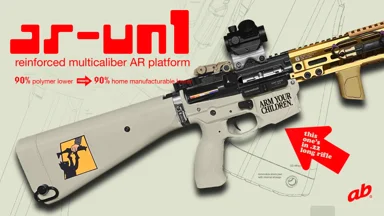
The ciwielab AR-UN1 V2 is a fresh reminder that the AR-15 platform is no longer a single-caliber rifle—it’s a modular chassis that can be re-skinned for whatever cartridge the builder wants to feed it. By swapping a printed front magwell insert, the same lower can cradle everything from a .22 LR plinker to a 9 mm Glock magazine or even a 300 BLK upper, all without the builder having to buy a new receiver for each hobby. That kind of flexibility is exactly what the 2A community has been chasing since the first 80-percent lower hit the market: one serialized piece of hardware that can legally morph into multiple guns instead of multiple serialized guns that each need their own paperwork.
What sets the AR-UN1 V2 apart is the attention paid to longevity and printability. Separate internal FCG pin bushings printed flat eliminate the classic weak spot where pin holes crack under recoil, while the replaceable magwell lets the user fine-tune feed geometry without reprinting the entire lower. In practical terms, that means a hobbyist can iterate on a single receiver for months—testing 9 mm one weekend, .223 the next—without ever touching a drill press or sending another Form 1 to the ATF. It’s a small but meaningful step toward democratizing multi-caliber experimentation while staying squarely inside the letter of current federal law.
For the broader 2A ecosystem, designs like this underscore why the right to keep and bear arms is inseparable from the right to manufacture and modify arms. When a single lower can host a rimfire trainer, a home-defense pistol-caliber carbine, or a suppressed 300 BLK rifle, the platform itself becomes a force multiplier for individual preparedness. That versatility is precisely what regulators fear and what builders celebrate: the ability to adapt faster than any statute can keep up.


