

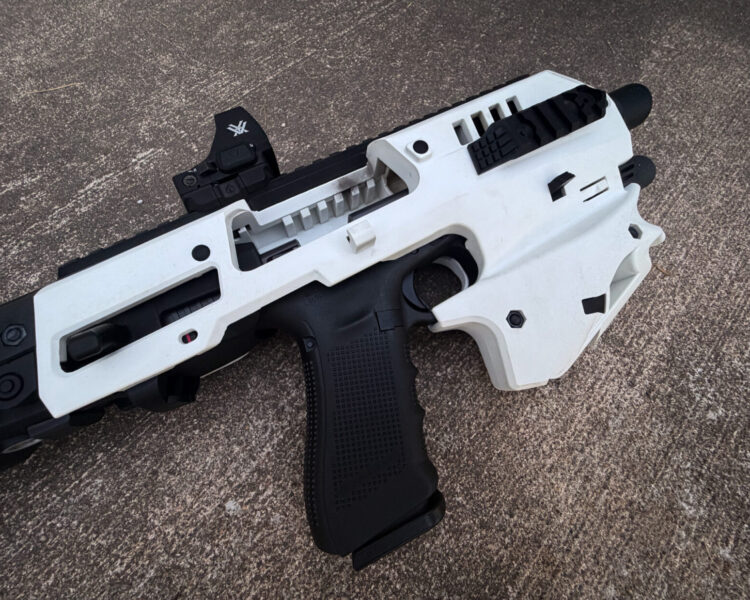
In a world where the lines between home defense, vehicle carry, and everyday carry keep blurring, the PDW quietly carves out its own lane as the thinking shooter’s middle ground. It isn’t trying to out-muscle an AR-15 or out-stealth a subcompact pistol; instead it delivers rifle-level terminal performance in a package that still fits under a jacket or behind a truck seat. That capability matters because the modern threat environment—active-shooter scenarios, rural property defense, or even the occasional “truck gun” role—often demands more reach and capacity than a handgun yet less bulk than a full-length carbine. For the 2A community this isn’t just another niche product; it’s a tangible reminder that rights extend to the tools best suited to real-world problems, not just the ones regulators find politically convenient.
What makes the PDW conversation especially pointed right now is how state and local restrictions keep trying to pigeonhole firearms into outdated categories. A braced pistol or folding-stock PDW can suddenly become a regulatory headache depending on which side of a state line you’re standing, even though the mechanical function hasn’t changed. That friction underscores why the community must stay vigilant: every new configuration that improves civilian readiness also becomes a target for incremental control. At the same time, the growing popularity of these platforms signals a broader cultural shift—shooters are no longer content with the binary choice of “pistol or rifle” and are instead demanding purpose-built solutions that respect both the Second Amendment’s text and the practical demands of self-reliance. In that sense, the PDW isn’t merely a bridge between two legacy categories; it’s evidence that an armed citizenry continues to innovate faster than the bureaucracies trying to contain it.


