

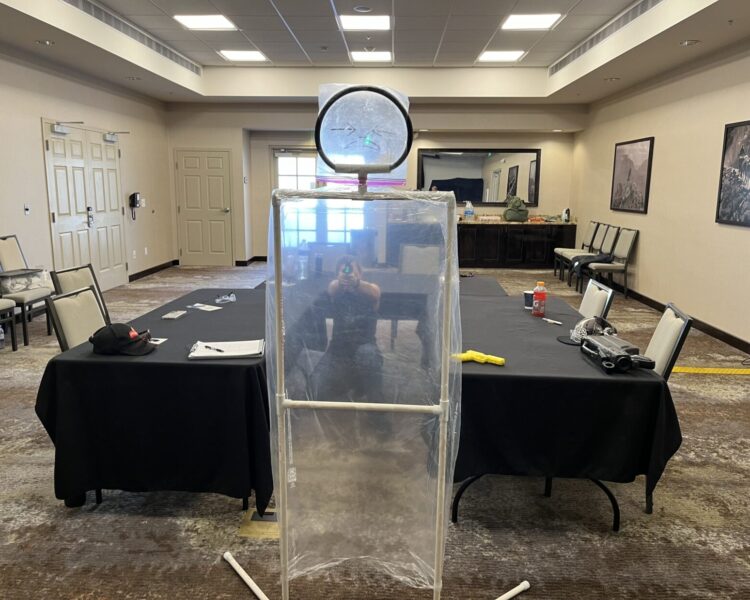
Cellophane Man turns the abstract language of Rule 4—“know your target and what is beyond it”—into something you can literally see through. By stretching a sheet of clear film across a doorway or downrange frame, instructors create an instant, unforgiving line-of-sight that every muzzle must respect. When a student’s barrel drifts even an inch past the plane, the cellophane catches the light and the violation becomes visible to the entire line, eliminating the usual debate about angles and backstops. The prop costs pennies, stores in a range bag, and survives hundreds of repetitions, yet it compresses hours of verbal instruction into a single, visceral lesson.
What makes the device quietly radical is how it democratizes safety culture. New shooters often treat the four rules as rote commandments handed down by gray-bearded range masters; Cellophane Man converts those words into shared, empirical evidence that anyone can test. Instructors report faster skill uptake and fewer defensive arguments—“I thought it was clear”—because the film doesn’t negotiate. The same transparency also scales: law-enforcement cadets, hunter-education classes, and even legislators taking their first range session grasp muzzle discipline more quickly when the boundary is physical rather than theoretical.
For the broader 2A community the payoff is reputational as much as practical. Every negligent discharge headline chips away at the narrative that gun owners are responsible stewards of liberty. Tools like Cellophane Man let instructors generate measurable, replicable improvements in safety performance that can be shown to skeptics and lawmakers alike. In an era when training standards are under constant scrutiny, low-cost, high-impact aids reinforce the argument that the firearms community is capable of policing itself—if given the freedom and the right teaching methods to do so.


