

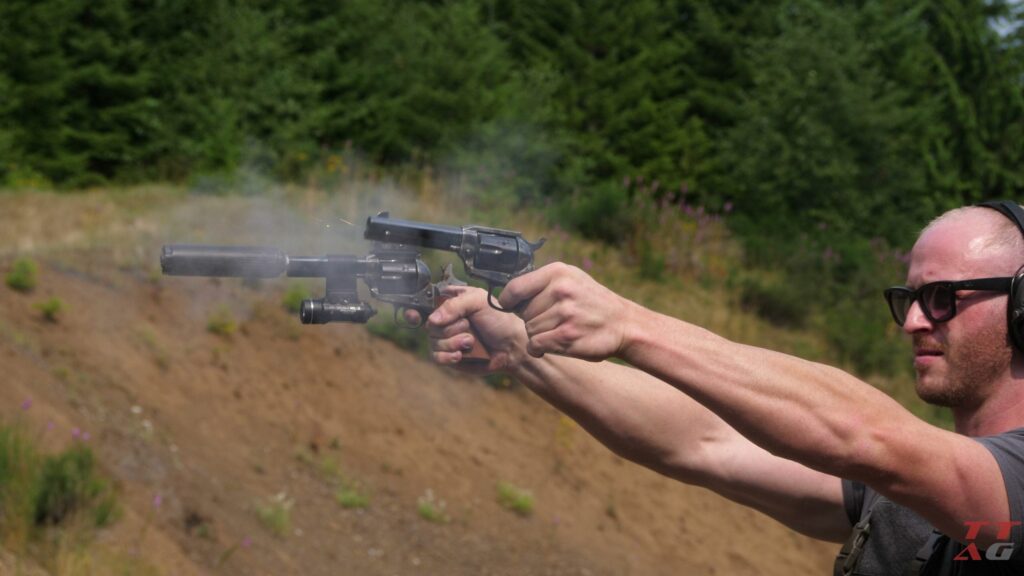
The notion that revolvers are inherently “un-suppressible” has been repeated so often it became dogma, yet the Uberti .38 Spencer handed over proves the rule was always more about cylinder-gap blast than mechanical impossibility. Once you thread the barrel and add a suppressor rated for revolver pressures, the only remaining noise path is that crescent-shaped gap between cylinder face and barrel; even there, modern designs with tight lock-up and a suppressor’s initial expansion chamber can shave enough decibels to turn a traditionally earsplitting .38 into something hearing-safe at the firing line. The real engineering trick isn’t eliminating the gap—it’s managing its report so the overall signature drops below the pain threshold, something accomplished by marrying a quality suppressor with a revolver whose cylinder-to-barrel fit is already sub-thousandths.
For the 2A community this small revelation carries outsized implications. Suppressors remain the most practical hearing-protection upgrade the NFA still taxes and delays, and the fact that wheel guns can join that quieter future expands options for cowboy-action competitors, outdoorsmen who carry revolvers for defense against animals, and anyone who values the simplicity of a revolver but refuses to trade auditory health. It also undercuts the old anti-suppressor talking point that “only assassins want them,” because the same hardware that quiets a semiauto for home defense now quiets a revolver for the hunter who needs five reliable, unsuppressed-speed reloads in bear country. In short, the technology is catching up to the culture: if a threaded Uberti can wear a can, the last mechanical excuse for leaving suppressors in regulatory limbo has started to evaporate.


