

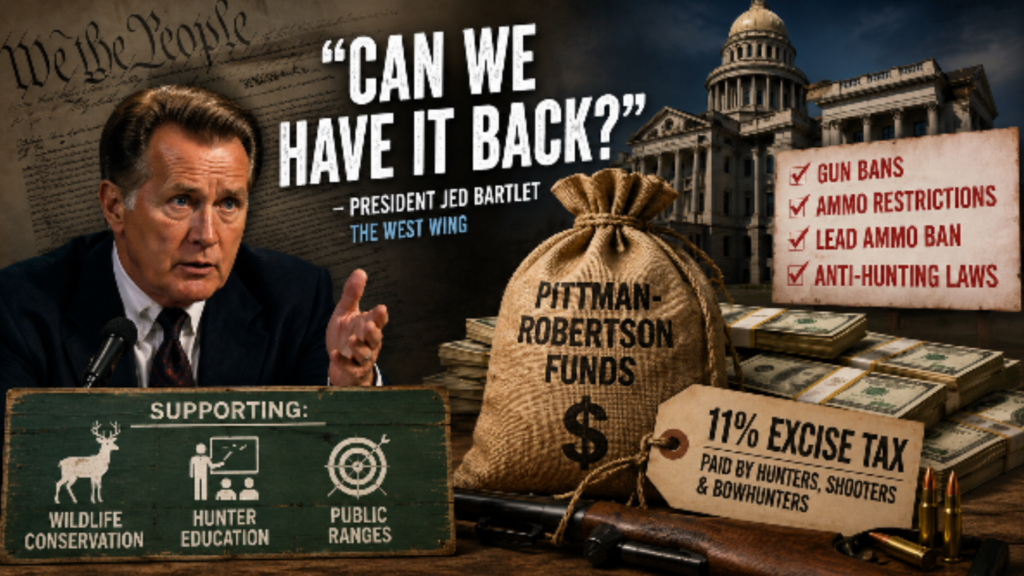
Gun owners and hunters have been quietly funding state wildlife agencies for nearly a century through the Pittman-Robertson excise tax on firearms and ammunition, yet some of those same states now treat the very products that generate the revenue as contraband. The tax—11 percent on long guns and ammunition, 10 percent on handguns—has funneled billions into conservation, range construction, and hunter education, but the money is distributed by formula to states regardless of whether their legislatures later ban the sale of the taxed items. When California or New York shutter the legal market for standard-capacity magazines or certain semi-automatic rifles, the federal dollars keep flowing; the only people who lose are the law-abiding purchasers whose purchases created the revenue in the first place.
The deeper irony is that Pittman-Robertson was sold to Congress in 1937 as a user-pay model: sportsmen would tax themselves to preserve habitat and access. Today the model has been inverted—gun owners still pay, but anti-gun politicians spend the proceeds while simultaneously criminalizing the purchases that sustain the fund. A state that bans the most popular modern sporting rifles is effectively taxing its own citizens for the privilege of being disarmed, then using that tax to fund programs that may include “safe gun storage” campaigns aimed at the same demographic. The result is a growing constituency of hunters and sport shooters who feel they are subsidizing their own marginalization.
Reform ideas range from withholding apportioned funds from states whose laws effectively nullify the taxed activity, to allowing taxpayers to earmark a portion of their Pittman-Robertson contribution toward ranges or youth programs in more permissive jurisdictions. Either approach would re-anchor the program to its original logic: those who pay should have a say in how the money is used and whether it continues to flow to governments hostile to the activity being taxed. Without such a correction, the 2A community will keep writing the checks while watching the rights those checks were meant to support steadily erode.


