

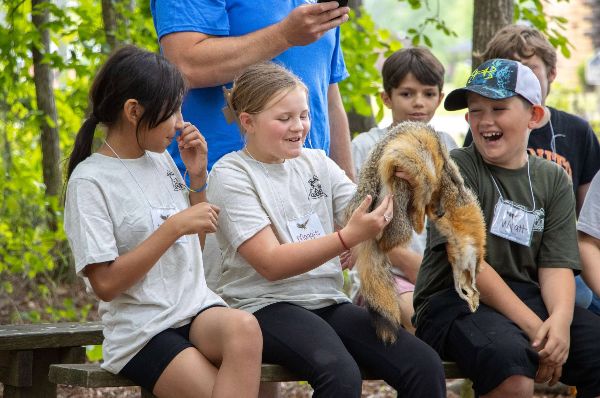
Camp Leopold’s expansion isn’t just another youth-education announcement—it’s a deliberate investment in the next generation of outdoorsmen and women who will one day decide whether hunting, shooting sports, and the Second Amendment itself remain culturally viable. By reaching more than twelve thousand students last year and scaling further for 2026–2027, the South Carolina Waterfowl Association is embedding firearms-adjacent skills—safe gun handling, ethical harvest, and habitat stewardship—into the same curriculum that teaches ecology and wildlife biology. That matters because the 2A community’s long-term strength depends less on court victories than on whether millions of future voters view responsible firearm ownership as a normal, conservation-minded activity rather than an abstract constitutional abstraction.
The program’s dual-track model—onsite field trips plus the in-school “Camp Leopold Plus+” option—also reveals a savvy adaptation to the realities of modern schooling and parental schedules. Not every district can bus hundreds of kids to a wetland, yet every classroom can still receive lessons that normalize the idea that regulated hunting funds habitat work through excise taxes and license revenue. When students later encounter anti-hunting or anti-gun messaging, they’ll already possess firsthand context: they’ll know that the duck stamp they studied paid for the very marsh they visited and that the rifles used in hunter-education courses are the same tools that keep predator populations in check.
For the firearms community, the takeaway is straightforward: support these programs now or watch the cultural pipeline narrow later. Every student who learns to pattern a shotgun or identify a wood duck is one less voter likely to treat the Second Amendment as optional. Camp Leopold’s growth should therefore be treated as infrastructure—quiet, effective, and every bit as strategic as any range-building initiative or legislative defense fund.


