

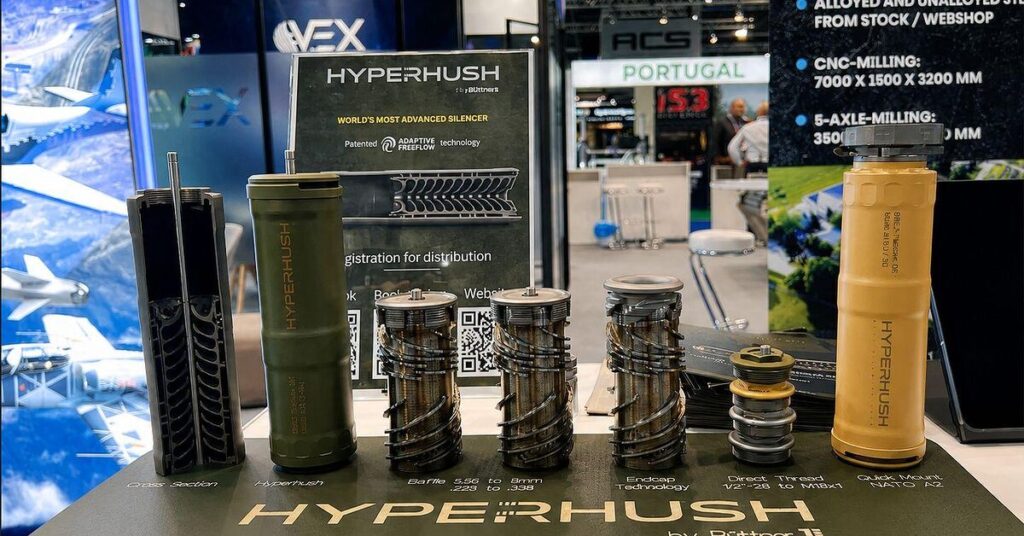
Büttner & Co. Ltd. just dropped a serious curveball at Eurosatory 2026 with its new HyperHush multi-caliber suppressor, and the timing couldn’t be more telling. While European defense shows usually spotlight big-ticket crew-served weapons and drone-killing turrets, a Hungarian firm choosing Paris to unveil a compact, cross-caliber can signals that sound suppression is no longer an afterthought—it’s a core design priority. The fact that this technology is emerging from a NATO ally with relatively permissive export rules could accelerate the trickle-down effect that American shooters have watched for years: yesterday’s military innovation becomes tomorrow’s Form 4 item.
For the 2A community the implications run deeper than decibel ratings. Multi-caliber suppressors shrink the logistical and financial barriers that have long kept many owners from running quiet on more than one host. If Büttner’s design proves durable across rifle and carbine platforms without constant adapter swaps, it undercuts the old argument that suppressors are niche accessories reserved for precision shooters or Hollywood props. That matters because every new data point showing suppressors as standard safety equipment—rather than exotic add-ons—strengthens the case that the Hearing Protection Act and similar reforms aren’t about giving enthusiasts toys; they’re about aligning U.S. policy with the same practical logic defense ministries already accept.
The Eurosatory debut also quietly reframes the global conversation. When a Hungarian company can showcase advanced suppression tech on the same floor as next-gen machine guns and counter-UAS systems, it normalizes the idea that sound reduction belongs in the same category as lethality and survivability. American advocates watching these shows should note the contrast: while European militaries integrate suppressors as baseline kit, domestic policy still treats them like regulated accessories. The more credible overseas examples accumulate, the harder it becomes for anti-2A voices to claim that mainstream access to suppressors somehow threatens public safety.


