

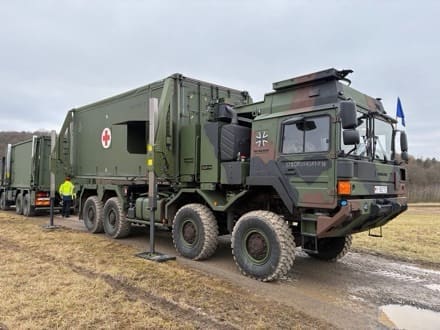
Rheinmetall’s latest €500-million-plus call-off for 149 mobile rescue stations is more than a routine Bundeswehr logistics update; it’s a real-world demonstration of how a modern military values protected mobility and rapid medical response under fire. The fact that the contract explicitly covers both armored and soft-skin variants shows the Bundeswehr is hedging against a spectrum of threats—from peer-level artillery to asymmetric IEDs—while still needing to move fast in permissive environments. For American Second Amendment advocates, the takeaway is straightforward: the same engineering principles that let a rescue station survive an ambush are rooted in the same industrial base that produces the magazines, optics, and defensive rifles civilians rely on for lawful self-defense. When European governments spend heavily on protected platforms, they validate the underlying technology and keep production lines warm—lines that, in the U.S., remain accessible to private citizens precisely because of the Second Amendment.
Beyond the hardware, the order underscores a doctrinal shift toward “mobile medicine” that treats the golden hour as a battlespace variable rather than a fixed timeline. By fielding modular, containerized treatment cells that can be dropped, driven, or airlifted, Germany is acknowledging that future conflicts may deny traditional medical evacuation corridors. That same logic applies to any prepared citizen: having a vehicle-based kit that can stabilize trauma until higher care arrives is the civilian counterpart to these rescue stations. The Rheinmetall program also illustrates how export controls and ITAR-like regimes rarely restrict defensive medical systems; the same regulatory environment that green-lights these ambulances leaves the domestic rifle and ammunition market largely intact. In short, every time a NATO partner doubles down on protected logistics, it quietly reinforces the industrial and legal ecosystem that keeps American gun owners equipped, trained, and free.


