

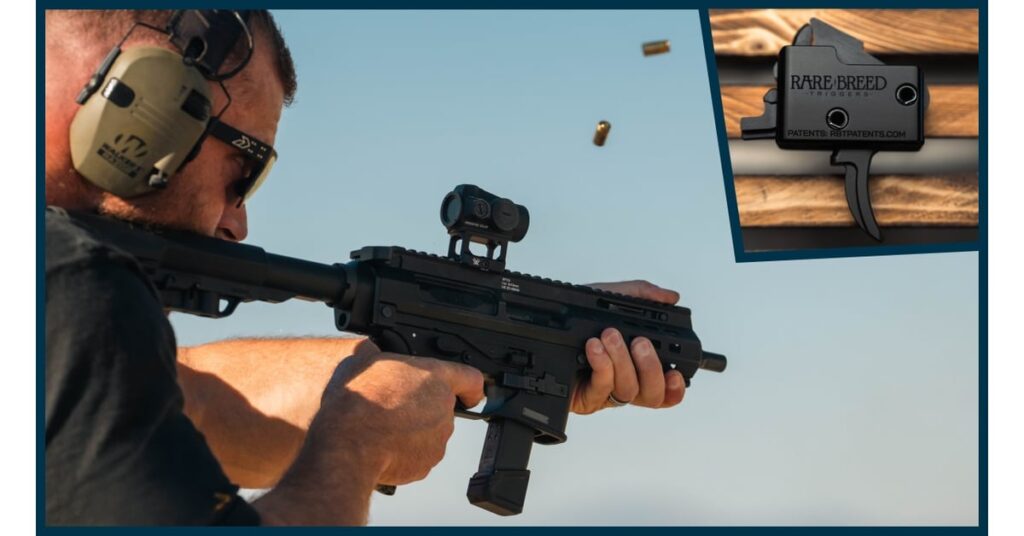
B&T’s decision to factory-install Rare Breed’s forced-reset triggers on the SPC9 and GHM9 is more than a product launch—it’s a deliberate statement that the Swiss-American firm is willing to bet its reputation on the legality and utility of FRT technology. By embedding the trigger at the manufacturing level, B&T sidesteps the “post-purchase modification” gray area that has drawn ATF scrutiny in the past, effectively telling regulators that the feature is integral to the firearm’s design rather than an aftermarket hack. For consumers, that translates into a turnkey package that arrives with the trigger already tuned, warrantied, and documented, removing the legal anxiety that has chilled sales of Rare Breed units since the ATF’s 2020 open letter.
The timing is equally strategic. With pistol-caliber carbines enjoying renewed popularity among competition shooters and home-defense-minded citizens, B&T is positioning the SPC9 and GHM9 as the fastest-shooting, factory-supported options in their class. That matters in an industry where milliseconds separate podium finishes and where split-second follow-ups can determine outcomes in defensive encounters. By aligning with Rare Breed, B&T also signals that it views forced-reset technology not as a novelty but as a legitimate evolution of semiautomatic function—one that preserves the single-shot-per-pull definition while delivering a rate of fire that rivals binary triggers without the legal baggage.
For the broader 2A community, the partnership underscores a growing trend: manufacturers are no longer content to wait for regulators to define the edges of “machine gun” versus “semiautomatic.” Instead, they are engineering around potential restrictions at the design stage, forcing courts and agencies to confront the technology on its technical merits rather than its provenance. If the SPC9-FRT and GHM9-FRT survive inevitable legal challenges, expect other high-end producers to follow suit, accelerating the normalization of forced-reset systems and further eroding the notion that rate-of-fire alone determines whether a firearm is an arm protected by the Second Amendment.


