

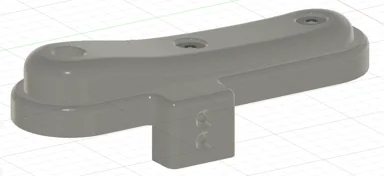
The B&T APC9 telescoping stock just got a meaningful upgrade from the community that refuses to accept “good enough” as the final word on ergonomics. This beta endplate replaces the factory Gen 3 piece with a larger footprint, a subtle curve that still keeps the slim profile the APC9 is known for, and—most importantly—a bolted-in pad that can be swapped without replacing the entire stock. By using common McMaster-Carr hardware instead of proprietary fasteners, the design lowers the barrier for anyone who wants to experiment with different materials or shapes later, turning a one-time purchase into an evolving platform rather than a sealed unit.
What makes this release noteworthy isn’t just the geometry; it’s the signal it sends about how the 2A ecosystem now operates. A single user spotted a pain point, iterated with another tester, and published a solution that works around B&T’s factory screws while preserving the original stock’s compact footprint. That kind of rapid, open feedback loop compresses the traditional product-development timeline from years to weeks and keeps pressure on manufacturers to either match the innovation or watch aftermarket parts eat into their margins. It also quietly reinforces the principle that lawful gun owners are perfectly capable of improving their own equipment without waiting for corporate R&D cycles.
For the broader community, this small part is a reminder that rights are exercised through both hardware and knowledge. Every time someone releases a tested, non-prohibited file that solves a real usability issue, it normalizes the idea that civilian firearms are meant to be maintained, customized, and improved by their owners. If demand materializes for alternate pads—rubberized, contoured, or even color-matched—the same open-source model can scale quickly, proving once again that the Second Amendment is defended not only in courtrooms but on workbenches where tinkerers keep pushing the envelope.


