

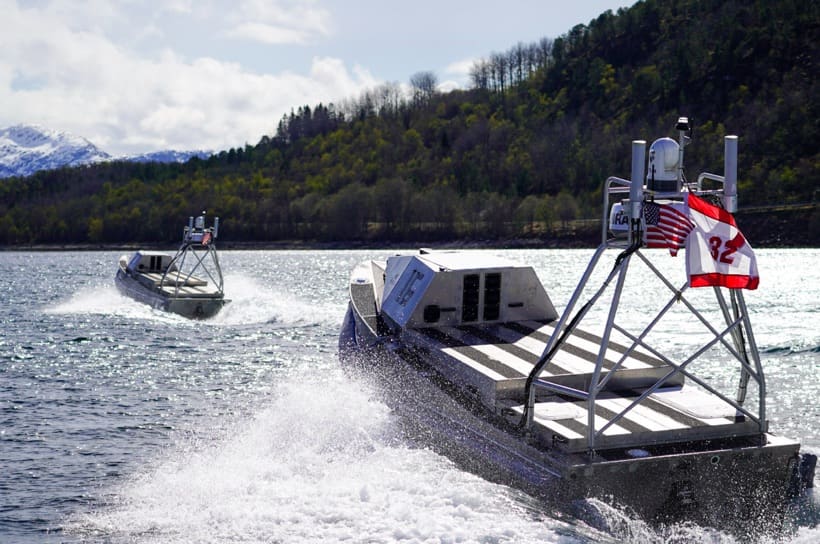
BlackSea Technologies just put its Global Autonomous Reconnaissance Craft through its paces in the frozen waters off Ramsund, Norway, during NATO’s Arctic Sentry 2026 exercise, proving that small, smart surface drones can operate reliably in brutal cold while talking seamlessly with both U.S. and Norwegian warships. What stands out is how quickly these compact, modular vessels can be re-tasked from ISR to force-protection or even light strike roles without putting sailors in harm’s way—an approach that mirrors the same autonomy and reliability gun owners already demand from modern defensive firearms. The real story isn’t just the hardware; it’s the signal that Western navies are finally treating unmanned systems as everyday tools rather than science projects, which should accelerate the same kind of rapid, market-driven innovation we’ve seen in the civilian firearms sector once regulatory barriers loosen.
For the 2A community the lesson is straightforward: every time a NATO partner validates an autonomous platform in extreme conditions, it normalizes the idea that individuals—not just governments—should have access to the best available technology for self-defense and deterrence. Just as suppressors, optics, and now smart rifles moved from “military only” to mainstream civilian use, these GARC-class vessels will eventually trickle down into commercial and private security applications. The faster that happens, the stronger the argument becomes that law-abiding citizens deserve the same edge in autonomy and situational awareness that navies are already fielding. In short, Arctic Sentry 2026 wasn’t only a naval exercise; it was another data point showing that freedom and technological superiority travel together.


