

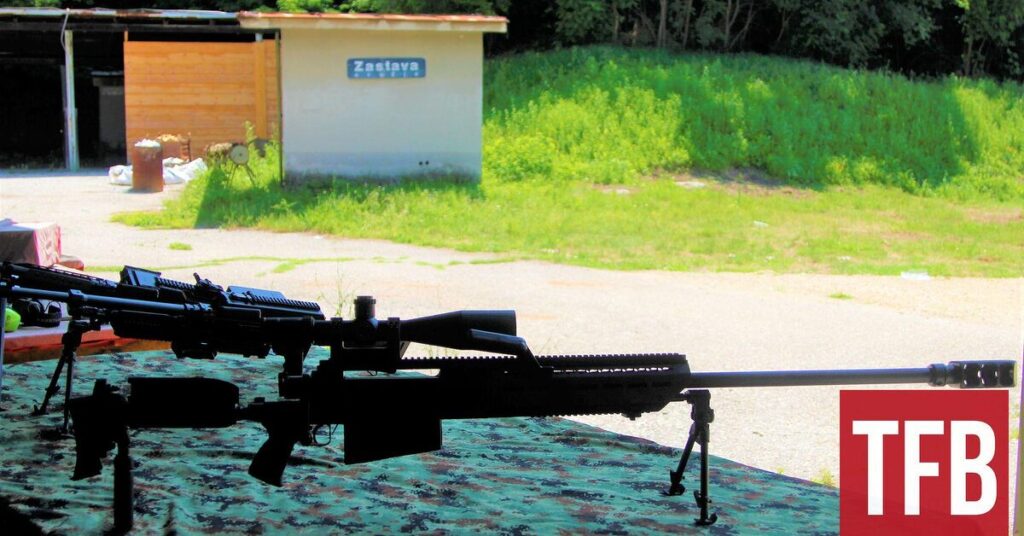
The Black Spear’s origin story is a textbook case of how necessity and ingenuity collide under pressure. When Milojeko Brzaković sketched the first drawings in the early 1990s, Serbia was under an arms embargo and the Yugoslav wars were raging; the factory could not import Western .50-caliber designs, so it had to birth its own. That constraint forced Zastava’s engineers to blend lessons from the M93 Black Arrow—itself a scaled-up Mauser action—with modern ergonomics and optics rails, producing a rifle that could reach out and touch materiel at ranges once reserved for artillery spotters. For American shooters, the lesson is blunt: when governments try to choke supply lines, determined designers simply reroute around them, and the resulting hardware often ends up more versatile than the sanctioned imports it replaces.
Fast-forward to the present and the same rifles are quietly shaping the conversation about what “anti-materiel” really means on U.S. soil. While the ATF and some legislators eye anything chambered in .50 BMG with suspicion, the Black Spear’s Serbian pedigree reminds us that these platforms were never conceived as anti-personnel wunderwaffen; they were built to disable trucks, radar arrays, and parked aircraft. That distinction matters when rights advocates argue that the Second Amendment covers arms “in common use” for lawful purposes. If a Serbian embargo-era stop-gap can evolve into a precision tool for agriculture, long-range competition, and emergency-response teams clearing hurricane-blocked roads, then the burden falls on prohibitionists to prove why American citizens should be denied the same capability their Serbian counterparts fought an embargo to keep.


