

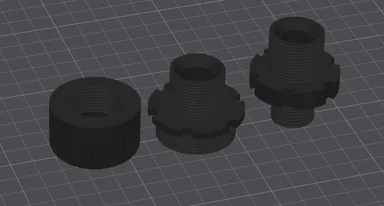
The Bix_Mount 3Lug represents a fascinating evolution in the ongoing arms race between suppressor manufacturers and the 3D printing community—where hobbyists are essentially reverse-engineering commercial mounting solutions faster than companies can patent them. This two-part, self-centering design for HK-style tri-lug devices isn’t just another printable gadget; it’s a direct challenge to the traditional suppressor ecosystem that has long relied on proprietary threading patterns and expensive aftermarket adapters to maintain market control. The inclusion of both HUB and 3/4×16 adapter compatibility suggests the designer understands that in today’s modular suppressor landscape, versatility isn’t a luxury—it’s survival.
What’s particularly noteworthy is how this project embodies the broader tension between innovation and regulation in the firearms space. While the designer openly labels it as untested WIP and invites community feedback, they’re essentially crowdsourcing the R&D that would traditionally cost suppressor companies tens of thousands in testing and certification. This democratizes access to mounting solutions that might otherwise require purchasing multiple proprietary adapters, but it also raises questions about liability, quality control, and the gray areas where hobbyist innovation meets ATF scrutiny. The 2A community has always thrived on this kind of collaborative problem-solving, yet projects like this walk a fine line between advancing access and potentially creating regulatory headaches.
For the broader suppressor market, designs like the Bix_Mount signal that the days of closed ecosystems and captive customers may be numbered. As printable, adaptable mounting solutions proliferate, manufacturers will face increasing pressure to either embrace open standards or justify their premium pricing through superior materials and testing—rather than artificial scarcity. This represents exactly the kind of market disruption that keeps the firearms industry dynamic and responsive to user needs, even as it challenges established business models.


