

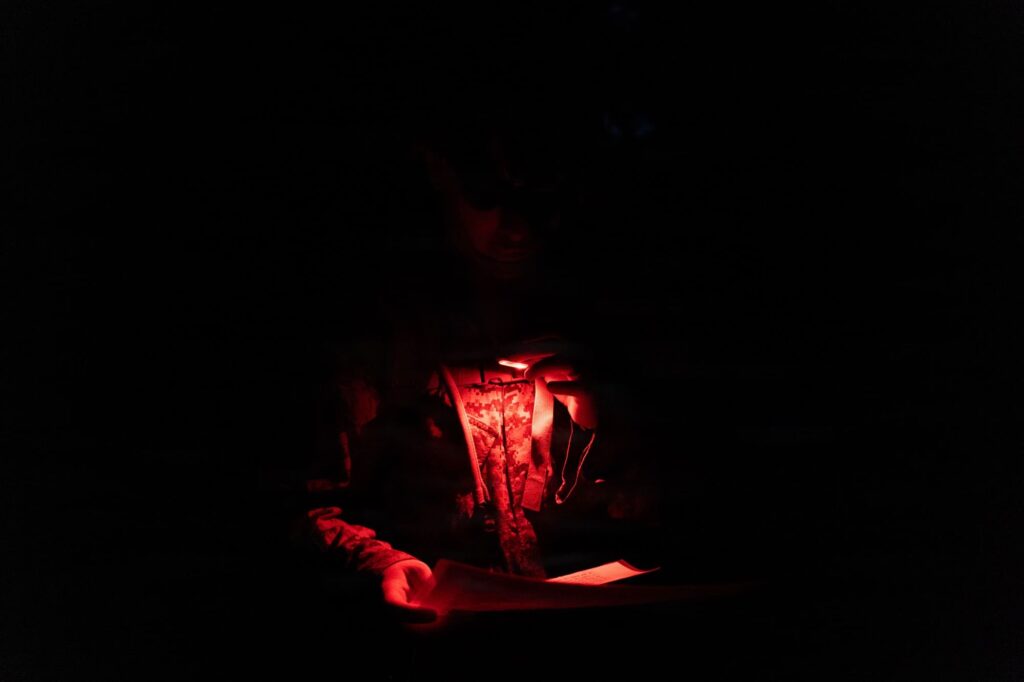
Darkness doesn’t just hide the enemy; it multiplies every risk a rifleman already carries, turning a simple route recon into a high-stakes navigation problem where depth perception, color cues, and peripheral awareness all vanish inside a narrow green tunnel. The Marine in the photo isn’t merely “using night vision”—he’s paying the hidden tax every movement imposes when the mission refuses to pause for daylight, a reality that echoes the daily calculus gun owners make when they decide whether to carry, train, or even speak openly about their rights. Every added layer of gear, every extra hour on the range, every legal or social cost exacted for exercising the Second Amendment is another toll the movement must absorb if it intends to remain effective after sunset or after the next round of restrictions.
That same principle scales from the individual Marine to the broader 2A community: rights that look robust in daylight can shrink dramatically once political or cultural “night vision” is required. When states layer permitting schemes, insurance mandates, or red-flag procedures on top of an already complex legal landscape, they are not merely regulating—they are raising the cost of movement until only the most committed (or the most affluent) can still operate. The photo reminds us that the mission does not stop because conditions worsen; it simply demands better preparation, clearer communication, and a willingness to mark the danger areas before the next patrol steps off. For gun owners, that means sustained legal defense funds, state-level organizing that anticipates new obstacles, and training regimens that treat every range session as a rehearsal for degraded conditions rather than a casual hobby.
Ultimately, the image captures a universal truth the firearms community ignores at its peril: freedom of movement—whether across a darkened battlefield or across an increasingly restrictive legal map—always carries a price measured in time, money, and risk tolerance. Those who refuse to acknowledge the cost will find themselves frozen at the trail intersection, waiting for conditions that may never improve, while those who plan for it keep the patrol moving forward.


