

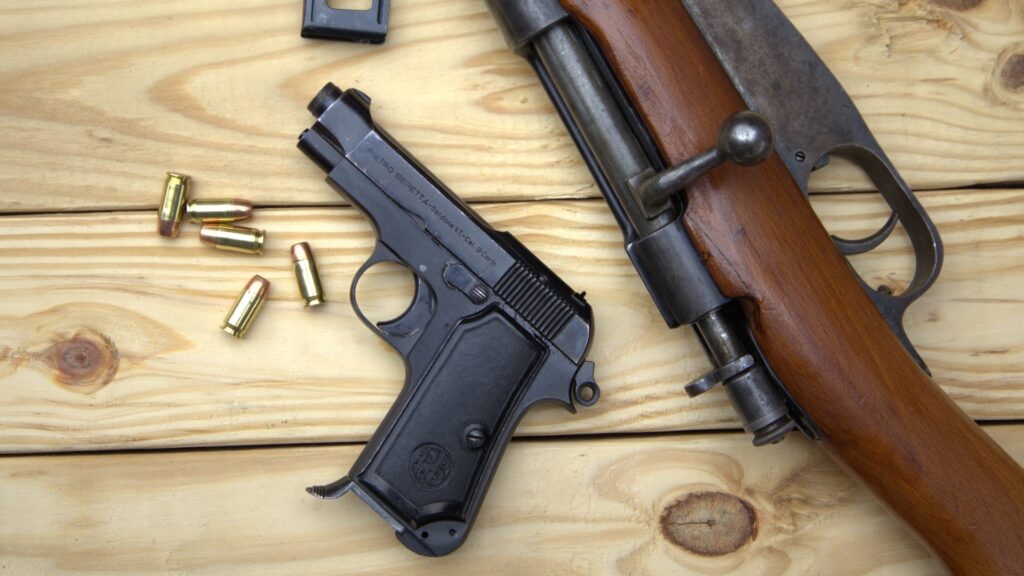
The Beretta M1934 isn’t just another vintage sidearm—it’s a living reminder that the right to keep and bear arms has always been tied to the tools that actually work when governments change hands and alliances shift. Chambered in .380 ACP and built with the kind of no-nonsense Italian craftsmanship that still feels over-engineered today, this compact blowback pistol armed Italian forces from the mid-1930s straight through the 1990s. That six-decade service life tells you everything about its reliability: while other nations chased bigger calibers and flashier designs, Italy stuck with a gun that was small enough for officers and staff to carry daily yet stout enough to remain in inventory long after the Fascist era ended. For American gun owners watching today’s regulatory creep, the M1934’s story is a quiet rebuke to the notion that “old” equals “obsolete”—it’s proof that a well-made firearm can outlast political regimes, supply-chain disruptions, and shifting military doctrines.
What makes the 1934 especially relevant to the 2A community is how it embodies the principle that civilian and military arms have always overlapped. Beretta’s decision to produce a commercial version alongside the military contract meant private citizens could own essentially the same pistol that equipped an army, a direct parallel to the American tradition of citizens fielding the same quality of arms as their government. The gun’s quirks—an exposed hammer, a heel-mounted magazine release, and that distinctive slab-sided profile—aren’t bugs; they’re features that prioritized function over fashion and still function today because the company refused to chase trends at the expense of durability. In an era when some politicians treat magazine capacity and caliber as negotiable, the M1934 stands as evidence that effective self-defense doesn’t require the latest polymer wonder gun; it requires a design so sound that soldiers and civilians alike kept reaching for it across generations.
For today’s gun culture, the Beretta 1934 is more than a collector’s piece—it’s a tangible argument against the idea that restricting access to proven platforms somehow enhances safety. Its longevity under both royal and republican Italian governments shows that firearms technology, once refined, tends to resist obsolescence far better than the laws written about it. When modern shooters handle one of these pistols, they’re holding a direct link to the same engineering mindset that produced the 92FS and the civilian M9 clones now carried by millions of Americans. That continuity matters: it demonstrates that the right to bear arms isn’t preserved by novelty alone, but by the persistent defense of designs that have already proven they can serve both citizen and soldier across decades of political turbulence.


