

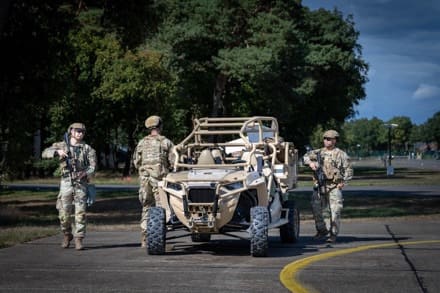
Belgium’s decision to tap the NATO Support and Procurement Agency framework for a $10.6 million order of Polaris MRZR D4 tactical vehicles is more than a routine defense purchase—it’s a quiet endorsement of American-designed, American-built light tactical mobility at a time when European militaries are scrambling to re-equip. The MRZR D4’s compact footprint, diesel powertrain, and ability to sling under a CH-47 or sling-load from a Black Hawk give small units the kind of rapid, all-terrain reach that larger MRAP-style trucks simply cannot match. For the 2A community watching from afar, the takeaway is straightforward: the same engineering DNA that produces rugged, reliable side-by-sides for civilian shooters, hunters, and preppers is proving itself in the harshest operational environments, reinforcing the argument that civilian access to these platforms strengthens both individual preparedness and the broader industrial base that keeps America’s edge sharp.
What makes the story especially relevant to Second Amendment advocates is the reminder that light tactical vehicles are dual-use by nature. The MRZR platform’s commercial cousins already serve ranchers, search-and-rescue teams, and private security contractors who value payload, low ground pressure, and the ability to operate far from paved roads. When foreign governments validate the design through NATO contracts, they inadvertently highlight why domestic restrictions on similar vehicles would be self-defeating; every restriction shrinks the production volume that keeps prices reasonable and innovation alive for law-abiding Americans. In an era of supply-chain fragility and rising interest in decentralized logistics, the MRZR’s success story is a case study in why the right to keep and bear arms extends logically to the tools that let citizens move, sustain, and defend themselves when centralized systems falter.
Looking ahead, this Belgian order is likely the first of many as NATO allies race to replace aging fleets with lighter, more deployable assets. Each additional foreign sale underwrites further R&D that trickles back into civilian models—more efficient engines, better suspension, advanced electronics—while expanding the skilled workforce that builds them. For pro-2A readers, the lesson is clear: supporting a robust domestic firearms and tactical-gear industry isn’t just about the Second Amendment in isolation; it’s about preserving the manufacturing muscle and engineering talent that let free citizens stay mobile, self-reliant, and ready for whatever comes next.


