

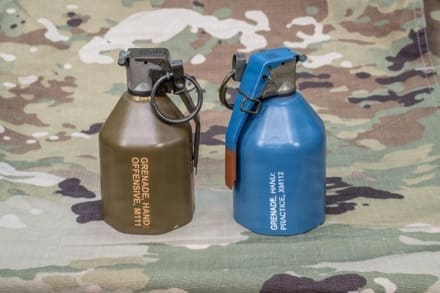
The U.S. Army’s decision to finally replace the Vietnam-era M67 with the new M111 Offensive Hand Grenade marks more than a routine equipment upgrade—it signals a deliberate return to purpose-built offensive tools that prioritize fragmentation control and repeatable manufacturing quality. Battelle’s role in shepherding the design from concept through Process Verification Testing and nearly 7,000 prototypes underscores how private-sector engineering rigor can accelerate fielding timelines while meeting the stringent safety thresholds demanded by modern close-combat doctrine. For Second Amendment advocates, the story is instructive: when government and industry collaborate on lethal technology, the same precision manufacturing techniques and quality-assurance disciplines that produce reliable grenades also underpin the civilian-legal components, optics, and ammunition that millions of Americans rely on for self-defense and sport.
Equally telling is the timeline—nearly six decades between offensive grenade designs—highlighting how regulatory inertia and risk-averse procurement can stall innovation even for items squarely within the military’s constitutional lane. The M111’s emphasis on safe, high-volume production mirrors the same supply-chain resilience the 2A community has championed when defending domestic ammunition makers and firearms manufacturers against import restrictions or capacity-killing rules. In an era when some policymakers still push to treat lawfully owned arms as inherently suspect, the Army’s willingness to invest in a new, optimized grenade quietly affirms that well-regulated access to effective weapons remains a legitimate national-security function, not an aberration.
Ultimately, the Battelle-Army partnership illustrates a broader truth: technological progress in small-arms-adjacent systems benefits the entire ecosystem of American gun owners. The same emphasis on repeatable processes, material traceability, and performance validation that produced the M111 also strengthens the case for protecting the industrial base that supplies civilian rifles, pistols, and optics. As debates over “assault weapons” and magazine capacity continue, stories like this remind us that the right to keep and bear arms is inseparable from the right to design, test, and manufacture them at scale—whether the end user wears a uniform or carries a concealed-carry permit.


