

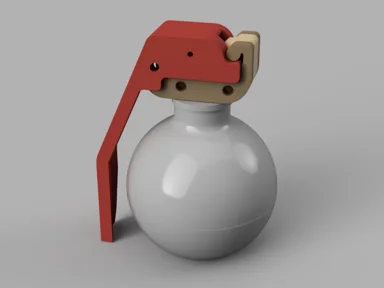
The B69 printed spoon represents a fascinating evolution in the DIY airsoft grenade space, where hobbyists like Stubbs Customs are pushing the boundaries of what can be fabricated at home with nothing more than a 3D printer and some ingenuity. Rather than relying on off-the-shelf components or expensive machined parts, this spoon design integrates directly with the B69 DIY fuze system, creating a modular platform that enthusiasts can customize, iterate, and improve upon. What makes this particularly noteworthy is how it transforms what was once a niche, parts-scavenging hobby into something approaching true open-source ordnance design—where the community can share, remix, and refine components without corporate gatekeepers or regulatory bottlenecks.
For the 2A community, this kind of grassroots innovation carries deeper implications beyond mere airsoft recreation. It demonstrates how accessible manufacturing technology is democratizing the creation of functional mechanical systems, skills that translate directly to understanding firearm components, tolerances, and assembly principles. While airsoft remains firmly in the replica category, the underlying knowledge—material selection, spring tensioning, timing mechanisms, and structural integrity—builds competencies that echo across the broader firearms ecosystem. The fact that these designs are being shared openly on platforms like Odysee also highlights the importance of decentralized content distribution, ensuring that technical knowledge remains accessible even as mainstream platforms increasingly scrutinize firearms-related content.
Critics might dismiss this as mere toys, but that underestimates how iterative design communities have historically driven innovation in everything from early computing to modern firearms accessories. The B69 spoon isn’t just a printable part—it’s a proof of concept that motivated individuals can engineer, test, and distribute functional mechanical solutions without institutional backing or corporate approval. In an era where regulatory pressure on 3D-printed firearms continues to mount, these seemingly innocuous airsoft projects serve as both technical training grounds and quiet assertions that the right to tinker, modify, and create remains alive and well in the maker community.


