

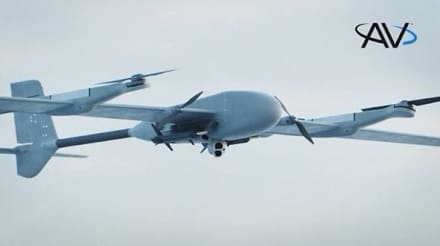
AeroVironment’s $117.3 million Army contract for the P550 eVTOL isn’t just another Pentagon line item—it’s a clear signal that the same autonomous, small-footprint tech that once lived only in the hands of hobbyists and private innovators is now being scaled for battlefield dominance. The P550’s electric vertical takeoff and landing design gives the Army a Group 2 UAS that can loiter, relay targeting data, and operate in swarms without the logistical footprint of traditional aviation assets. For the 2A community, this matters because the underlying flight-control, sensor-fusion, and electric-propulsion breakthroughs that AV is monetizing were incubated in a civilian market that still enjoys broad access to similar components; any future regulatory squeeze on those civilian tools would directly throttle the very innovation pipeline the Army is now paying to accelerate.
The timing is equally telling. While legacy defense primes chase ever-larger, crewed platforms, AV is delivering a nimble, attritable system that aligns with the Army’s “Drone Dominance” push—essentially betting that quantity, autonomy, and rapid replenishment will matter more than exquisite single platforms. That same logic applies at the individual level: the same open-source flight controllers, high-energy-density batteries, and mesh-network radios that hobbyists and private security teams experiment with today are the direct ancestors of the P550’s architecture. When the Army writes a nine-figure check for an electric Group 2 UAS, it validates that the decentralized, small-team model of unmanned systems is no longer fringe—it’s doctrine.
For Second Amendment advocates, the takeaway is straightforward: the technologies that keep rifles, optics, and now drones in private hands are the same ones the military is racing to field at scale. Protecting the right to tinker, to iterate, and to own the tools of autonomy isn’t just a hobbyist concern; it’s national-security infrastructure. If the civilian ecosystem that spawned the P550 is allowed to thrive, the U.S. retains both a ready bench of citizen-innovators and a distributed production base that no single factory or regulation can easily choke off.


