

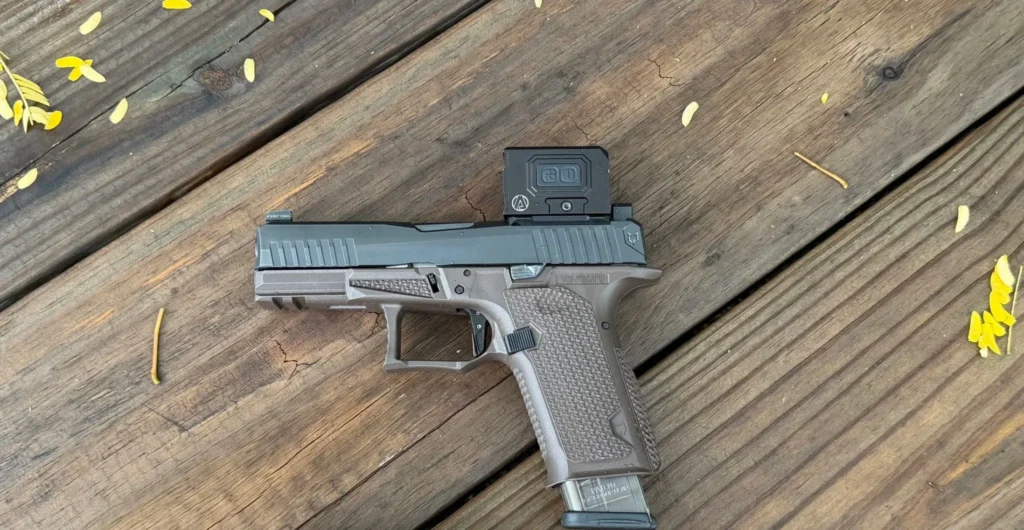
The Atibal Solar Tactical Dot stands out in a market flooded with open-emitter sights that fail the moment a little mud, rain, or even a careless finger touches the lens. By sealing the emitter completely inside a rugged metal housing, Atibal has essentially created a red-dot that behaves more like a tough miniature ACOG than a delicate open reflex. That design choice matters because it directly addresses the real-world abuse a defensive or duty optic will face—whether that’s a patrol rifle bouncing around in a cruiser, a competition gun getting dropped in a stage reset, or a home-defense carbine stored in a dusty safe. The solar backup is the quiet star here: when the battery eventually dies (and they always do), the sight still gathers ambient light to keep the dot alive, giving shooters a genuine no-fail layer that pairs nicely with the sealed emitter.
For the 2A community this matters because reliability under stress is the difference between a tool you trust with your life and one you hope works when the moment arrives. An enclosed solar dot removes two common points of failure—environmental contamination and power loss—without forcing users into the weight or cost penalty of a full holographic or magnified optic. That combination lowers the barrier for everyday carriers and new shooters who want something tougher than a budget open dot but don’t need to step up to premium European pricing. In an era when states keep adding restrictions and training requirements, gear that simply works when you need it most becomes a quiet form of resistance: it keeps the focus on marksmanship instead of constant equipment worries.
Atibal’s choice to emphasize solar power and total enclosure also signals where the industry is heading. As more states push for “safe storage” laws and magazine limits, the practical value of a sight that stays zeroed and powered through neglect or harsh conditions grows. Shooters who once accepted frequent battery changes and lens covers as normal are now seeing that an optic can be both simple and bomb-proof. That shift reinforces a core 2A principle: the right to keep and bear arms is only meaningful if the arms themselves remain functional when seconds count.


