

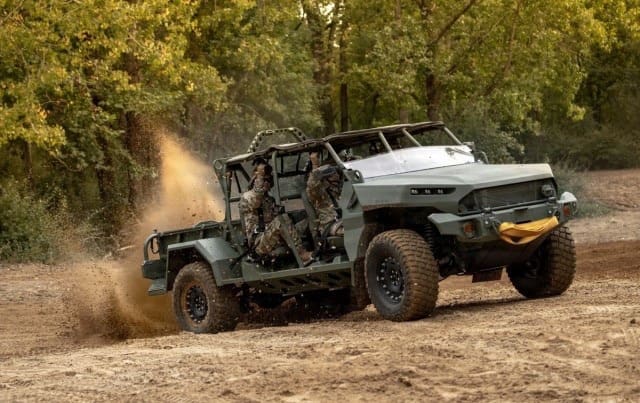
The Army’s push for an ultra-light tactical vehicle isn’t just about shaving pounds off a truck—it’s a direct response to the way modern battlefields have fragmented into smaller, faster-moving fights where every extra kilogram of armor or fuel can mean the difference between seizing an objective and being left behind. By stripping away the heavy, over-built protection that defined the MRAP era, the service is betting that speed, air-transportability, and a smaller logistics tail will matter more than surviving the last war’s IED threats. That same calculus is already playing out in the civilian world: the same lightweight composites, modular rail systems, and high-efficiency powertrains that let a four-man crew plus ammo scoot under a CH-47’s hook will inevitably trickle into the aftermarket for trucks, UTVs, and even the next generation of “truck guns” that weigh less but hit harder.
For the 2A community, the real story isn’t the vehicle itself—it’s the mindset shift it signals inside the defense-industrial base. When the Pentagon stops demanding ever-thicker armor and starts rewarding designers who can deliver 60 % of the capability at 40 % of the weight, the same engineers begin looking at civilian-legal firearms, suppressors, and optics with the same ruthless eye toward ounces and inches. Expect to see handguards, stocks, and even complete rifles that borrow the same finite-element analysis once reserved for blast-worthy underbodies. The result is a virtuous cycle: battlefield lessons produce lighter, stronger materials that then appear on store shelves, letting private citizens field rifles that handle like the service’s newest toys without the associated bureaucracy or cost.
Critics will argue that shedding armor leaves troops—and by extension, armed citizens—more vulnerable, but history shows that mobility has always been the best armor. A vehicle light enough to sling-load into a mountain LZ or a citizen’s trailer can outrun trouble faster than it can absorb it, and the same principle applies to the firearms we carry. The Army’s new ultra-light platform is therefore less a finished product than a proof-of-concept that the lightest solution is often the one that keeps you in the fight longest, whether that fight is measured in grid squares or in the defense of your own doorstep.


