

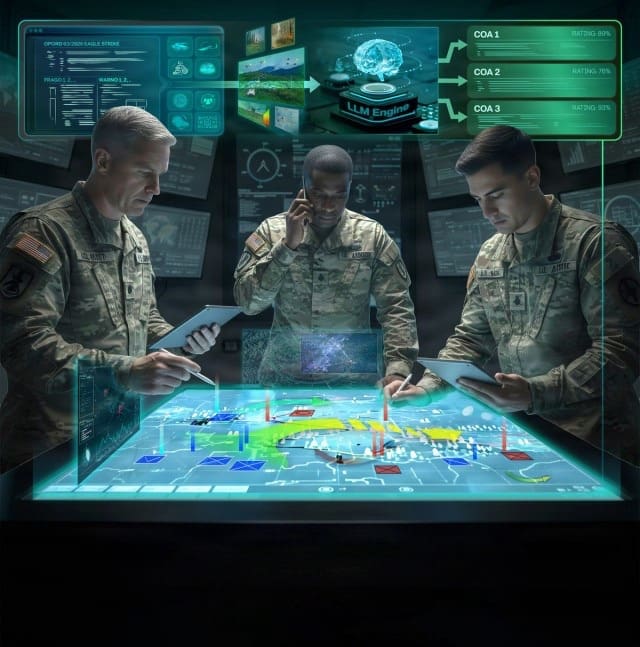
The Army’s new COA-GPT platform is more than a faster planning tool—it’s a proof-of-concept that large-language models can already compress the “observe-orient-decide-act” loop from hours to seconds. By ingesting terrain data, enemy dispositions, and friendly capabilities, the system spits out multiple courses of action that human commanders can accept, tweak, or discard. That same workflow—data in, options out, human in the loop—mirrors the decision cycle every armed citizen runs when seconds matter and backup is minutes away. The difference is scale: the Army is stress-testing the concept at brigade level; the 2A community can apply the principle at the individual level with far simpler, locally run models that keep personal threat assessments and response plans off government servers.
What makes this relevant to gun owners is the implicit admission that human cognition alone is the bottleneck. If the Pentagon is willing to hand AI the first draft of a battle plan, the same logic applies to the armed citizen who might need to decide whether, when, and how to present a firearm. The key safeguard the Army is advertising—continuous human oversight—translates directly to the range and the street: AI can propose, but only the rights-bearing individual can authorize force. That principle protects both operational security and civil liberties; once the model is trained, it can run on encrypted local hardware without ever phoning home to a federal database.
Longer term, the same generative techniques that draft battalion maneuvers could be turned toward red-team simulations for concealed-carry holders, helping them game out worst-case encounters without ever leaving their living room. The technology is dual-use by nature; the 2A community’s task is to ensure the civilian side of that duality remains legal, private, and unmonitored. If the Army can trust an AI to sketch a defense of the Fulda Gap in seconds, law-abiding Americans should be equally free to run defensive scenarios on their own devices—because the right to keep and bear arms has always included the right to think faster than the threat.


