

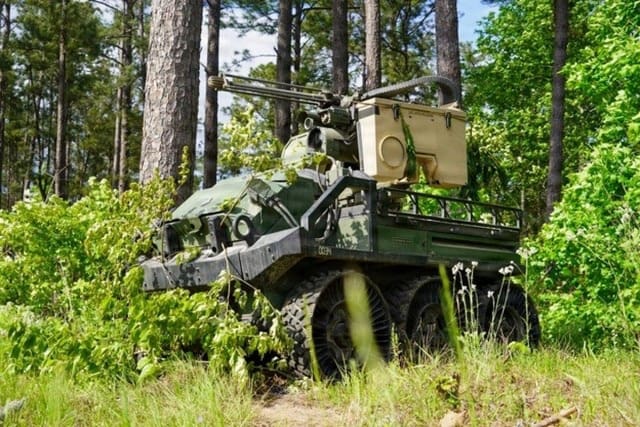
The Army’s latest move to bolt lethal payloads onto unmanned ground vehicles isn’t just another R&D footnote—it’s a live-fire demonstration that the future of armed autonomy is already rolling out of Picatinny’s gates. By teaming with HDT Robotics under a cooperative R&D agreement, the Armaments Center is essentially stress-testing the legal and technical seams between “robot mule” and “robot gun truck.” For Second Amendment advocates, the takeaway is blunt: if the federal government can green-light AI-directed lethal systems on four wheels, the same constitutional logic that protects an individual’s right to keep and bear arms must also protect the right to integrate lawful technology—optics, triggers, or autonomy—onto lawfully owned firearms. The slope isn’t slippery; it’s already greased.
What makes this partnership especially telling is the deliberate blurring of lines between Soldier and system. The Army isn’t merely strapping weapons to drones; it’s writing the software that decides when, where, and against whom those weapons fire. That level of delegation raises the same due-process questions gun owners have voiced for years about no-fly lists and red-flag laws: who programs the rules of engagement, and how do you appeal an algorithm? The 2A community should watch these trials not as distant military theater, but as a preview of the regulatory scripts that could one day govern civilian smart guns, networked rifles, or AI-assisted home-defense systems. If the Pentagon can’t articulate clear human-in-the-loop standards for battlefield robots, civilians have every reason to distrust any future mandate that their own firearms must “phone home” before they’re allowed to function.
Finally, the timing matters. While legacy media fixates on “assault weapon” bans and pistol braces, the services are quietly normalizing armed autonomy at the hardware layer. That creates an asymmetry: the same agencies that restrict magazine capacity or barrel length for citizens are simultaneously exploring 24/7 lethal drones that never sleep, never miss a shot, and never require probable cause. The lesson for pro-2A strategists is to expand the battlefield of ideas beyond walnut-stocked sporting arms and into the code that will govern tomorrow’s firearms. If the right to keep and bear arms is to remain relevant, it must encompass the right to program, modify, and—when necessary—air-gap the digital nervous systems of the weapons we own.


