

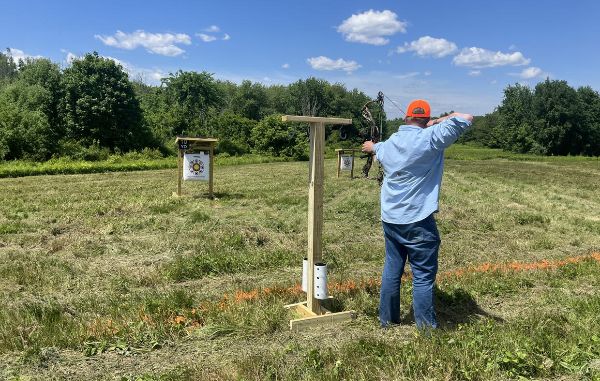
MassWildlife’s decision to open six free temporary archery ranges this summer and fall is more than a simple expansion of public shooting facilities—it’s a quiet but meaningful acknowledgment that Massachusetts still contains pockets where traditional outdoor skills can be practiced without the heavy hand of regulation. By requiring only a 2026 range pass obtained through a straightforward application, the agency is lowering the barrier for new and returning archers at sites like Ayer Game Farm, Erwin Wilder WMA, and Wayne F. MacCallum WMA. For the 2A community, this matters because archery remains one of the few disciplines where the right to keep and bear arms intersects directly with self-reliance, hunting heritage, and marksmanship fundamentals that translate to firearm proficiency. In a state where pistol permits and range access often feel like navigating a regulatory maze, these WMA ranges offer a comparatively frictionless on-ramp for families and individuals who want to build competence outdoors.
The timing is also worth noting. As Massachusetts continues to tighten rules around modern sporting rifles and magazine capacity, the state is simultaneously investing in archery infrastructure that can serve both hunters and recreational shooters. This creates an interesting policy contrast: while certain semi-automatic platforms face increasing restrictions, the bow and arrow—still constitutionally protected arms—receive active state support. For pro-2A advocates, the move underscores the importance of preserving every lawful avenue of arms practice, because skills developed on the archery range reinforce the broader culture of responsible, armed self-reliance. It also signals that public land managers recognize the political and practical value of keeping traditional shooting sports accessible rather than ceding all outdoor recreation to non-shooting interests.
Longer term, these temporary ranges could become permanent fixtures if usage numbers justify the investment, potentially expanding the footprint of lawful shooting opportunities in a notoriously restrictive state. That outcome would benefit not only archers but the entire firearms community by normalizing the presence of armed citizens on public land and demonstrating that multiple-use WMAs can accommodate both conservation goals and the exercise of Second Amendment rights. In an era when many states are actively shrinking the space for lawful carry and training, Massachusetts’s modest step forward on archery access is a reminder that incremental gains still matter and that every open range, every simplified permit, and every new shooter brought into the fold strengthens the overall ecosystem of American gun culture.


