

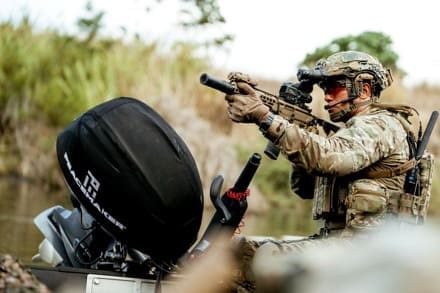
Aquaterro’s $160-million-plus win with the Australian Defence Force is more than a procurement headline—it’s a textbook case of how a nimble, privately held domestic firm can scale into a Tier-1 supplier when government policy aligns with industrial reality. By pairing its own armor and small-arms integration know-how with U.S. OEM technology, the 32-year-old Australian company is effectively exporting American manufacturing DNA under a sovereign-industry banner. That matters to the 2A community because it proves the commercial viability of high-spec defensive and offensive systems outside the traditional Beltway primes, and it quietly validates the same supply-chain logic that keeps American gunmakers competitive: specialization, export discipline, and tight feedback loops with end users.
For American gun owners watching the global small-arms market, the ADF deal is a reminder that the same engineering margins that produce next-generation body armor and modular carbines for Canberra are downstream of a robust domestic civilian market. Every time a U.S. firm licenses barrel steel, optic mounts, or ballistic fabrics to an ally, the R&D amortization is partly subsidized by American consumers who keep the production lines warm. Aquaterro’s success also underscores why export-control reform and ITAR carve-outs matter: when licensing is streamlined, American innovation travels farther and funds deeper capability—exactly the virtuous cycle the 2A community has long argued sustains both freedom and industrial strength.
Finally, the timing is instructive. As Canberra doubles down on AUKUS Pillar II advanced capabilities, Aquaterro’s contract signals that survivability and lethality programs are no longer niche; they’re core sovereign-industry bets. That trajectory mirrors the U.S. experience where commercial firearms ingenuity routinely seeds military modernization. In short, a privately owned Australian firm just proved that the same market forces and engineering talent that protect the Second Amendment at home can also equip allied democracies abroad—without surrendering control to sprawling state-owned arsenals or single-source foreign primes.


