

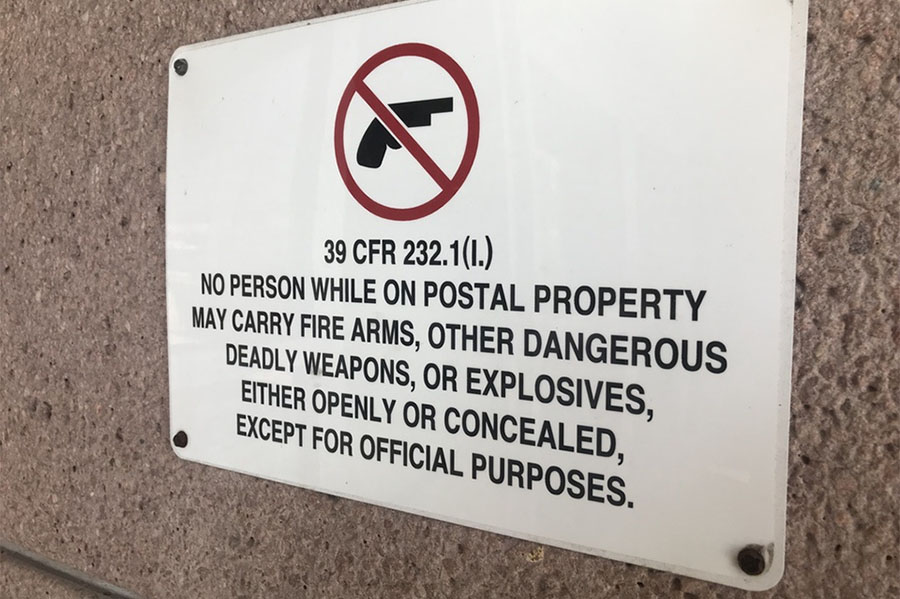
The Department of Justice’s quiet retreat from its appeal in the post-office carry case is more than a procedural footnote—it’s a telling admission that the government’s once-confident “sensitive places” theory is running out of legal oxygen. By declining to defend a nationwide ban on licensed carry inside postal facilities, DOJ effectively concedes that the lower court’s reasoning, grounded in the Bruen historical-tradition test, is likely to survive appellate scrutiny. That matters because post offices have long been the crown jewel in the “government building” category of prohibited locations; if they can’t be cordoned off from the Second Amendment, the rationale for keeping guns out of countless other federally managed spaces begins to fray.
For the broader 2A community, the win is both practical and strategic. Licensed carriers who routinely pass through postal lobbies no longer have to choose between obeying federal signage and obeying state permitting laws. More importantly, the retreat signals that DOJ litigators are recalibrating after a string of post-Bruen losses; resources that would have been spent defending anachronistic bans can now be redirected toward cases the government still thinks it can win. That triage, in turn, tells litigators and activists where to press next—federal courthouses, national parks with administrative buildings, and the expanding list of “quasi-governmental” spaces that rely on the same thin historical analogies the post-office rule once did.
The larger implication is unmistakable: every time a categorical prohibition collapses under Bruen scrutiny, the presumption flips. Instead of citizens having to prove that a given location is not sensitive, the government must now demonstrate a genuine historical tradition of prohibiting carry there—an evidentiary bar that grows steeper with each vacated ban. The post-office decision is therefore less an isolated victory than another mile-marker on a map that increasingly reads “Constitutional Carry—Federal Enclaves Included.”


