

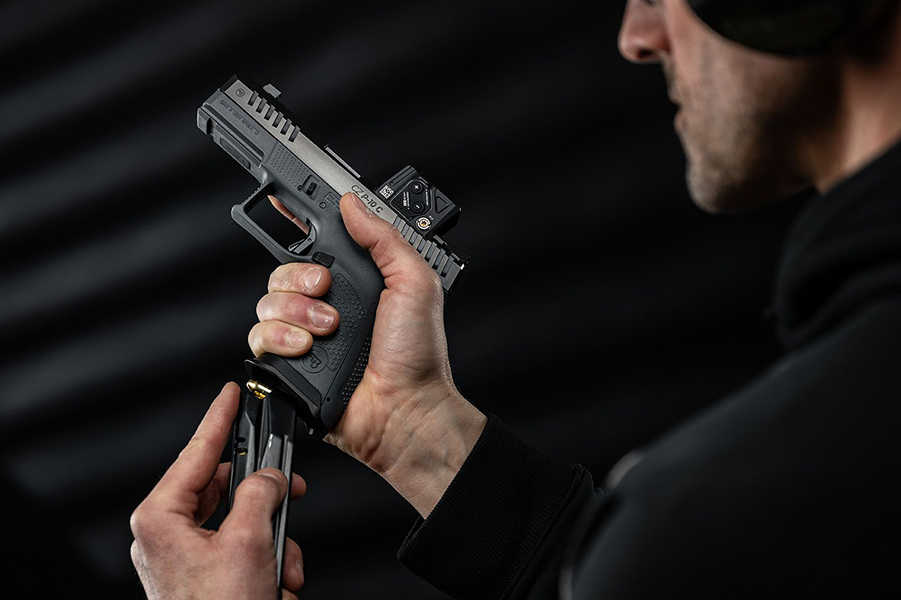
The CZ P-10 C Ported COA lands at a moment when the market is finally rewarding pistols that ship ready to run rather than demanding another trip to the gunsmith. By threading factory porting together with an Aimpoint COA already zeroed on the slide, CZ has collapsed three separate aftermarket decisions—optic choice, milling, and barrel modification—into a single SKU that hits dealers already sighted in and range-ready. That matters because the P-10 platform has long been praised for its out-of-box trigger and ergonomics; now the same gun that earned that reputation also carries the low-mount reliability of Aimpoint’s enclosed emitter and the recoil-taming effect of top-port venting without the customer absorbing lead time or extra cost.
For the 2A community this release is another data point in the quiet arms race between manufacturers and restrictive jurisdictions. States that once limited optics to “service-size” pistols are watching compact, optics-ready guns proliferate at price points once reserved for iron-sight duty guns. The P-10 C Ported COA undercuts the old argument that red-dot pistols are niche race guns; instead it normalizes a carry package that is faster on target, softer shooting, and still fits most everyday holsters designed around the standard P-10 C. In short, CZ is helping turn what used to be a custom-build conversation into an off-the-shelf transaction, and that shift strengthens the practical case for shall-issue carry everywhere the law still recognizes the right.
Beyond the spec sheet, the move signals that even traditionally conservative European makers are internalizing American demand signals. Porting and Aimpoint bundles were once the province of U.S. custom shops; seeing CZ integrate both at the factory level suggests the export market now drives product planning the same way domestic sales do. For enthusiasts watching the steady erosion of feature bans and magazine restrictions, each new configuration that arrives already “Gucci’d” from the factory is one more brick in the wall proving that innovation, not restriction, is what actually moves the industry forward.


