

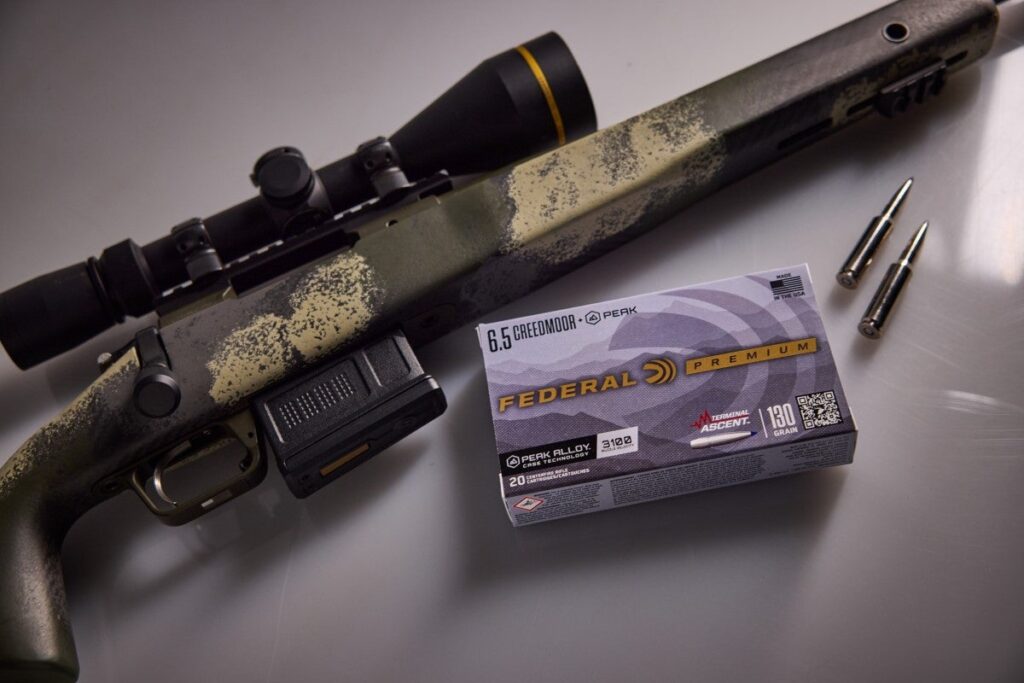
Federal’s decision to roll the 6.5 Creedmoor into its Peak Alloy line isn’t just another SKU drop—it’s a calculated move that recognizes how many precision shooters have already made the cartridge their everyday driver. By swapping the traditional brass case for a high-strength aluminum alloy, Federal is promising lighter weight without giving up the velocity or accuracy that made the 6.5 Creedmoor the darling of long-range competitors and hunters alike. The real story, though, is what this does to the economics of high-volume training: every ounce saved on the belt or in the range bag is an ounce that doesn’t have to be lugged to a match or a back-country hunt, and every extra round that fits in the same magazine footprint is another rep before the brass hits the ground.
For the 2A community the implications run deeper than marginal gains in ballistic coefficient. Lighter, corrosion-resistant ammunition lowers one of the last practical barriers to consistent practice—the sheer physical burden of hauling enough ammo to stay sharp. When a shooter can carry an extra hundred rounds without adding weight or bulk, the training curve steepens and the skill floor rises, which is exactly the kind of quiet capability-building that anti-gun advocates fear most. At the same time, the move signals that major manufacturers are listening to what the market actually wants: not another boutique wildcat, but an evolutionary improvement on a cartridge that already punches above its weight in both performance and popularity.
Critics will note that aluminum-cased ammo has historically faced skepticism over extraction reliability and case life, yet Federal’s track record with the .223 and .308 Peak loads suggests those concerns have been engineered away. If the 6.5 Creedmoor +Peak delivers on its promise of match-grade accuracy from a lighter platform, it could accelerate the shift toward polymer and alloy exotics that make defensive and competition rifles feel less like burdens and more like tools that stay on the shooter’s hip—or in the truck—without a second thought. In an era when every incremental advantage matters, Federal just handed the precision community another reason to keep the presses running and the magazines full.


