

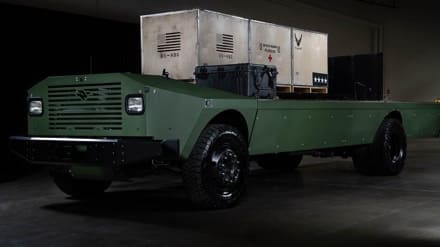
American Rheinmetall’s decision to team with Harbinger on a new line of hybrid UGVs isn’t just another Pentagon contract—it’s a signal that the same modular, autonomy-ready chassis that can haul ammo, sensors, or wounded troops today could just as easily become the backbone of tomorrow’s civilian logistics and security fleets. By grafting proven military integration know-how onto a commercially derived platform, the partnership slashes both unit cost and development time, which matters when the Department of War wants to field robots at the “pace of relevance.” For Second Amendment advocates, that speed-to-field translates into faster trickle-down: once these vehicles prove themselves in austere environments, their hybrid powertrains, sensor suites, and open-architecture control systems will migrate to the aftermarket, giving private citizens and small security teams access to tools previously reserved for federal agencies.
The deeper implication is architectural. Harbinger’s off-the-shelf hybrid skateboard lets American Rheinmetall bolt on mission modules without reinventing the drivetrain every time threat requirements change—an approach that mirrors how the AR-15 platform evolved from military select-fire roots into countless civilian configurations. If the DoW buys thousands of these UGVs, economies of scale will push component prices down for everyone else, from ranchers needing autonomous fence-line patrols to preparedness groups wanting resilient resupply options when the grid goes dark. In short, a program sold as “great-power competition” hardware quietly strengthens the distributed logistics layer that an armed citizenry relies on when centralized supply chains falter.
Critics may frame the story as further militarization of everyday technology, but the reverse is also true: commercial-grade hybrids now carry the ruggedization pedigree once exclusive to purpose-built military trucks. That convergence keeps innovation cycles short and prices competitive, ensuring that the same companies supplying robots to the Department of War remain answerable to a broad domestic market rather than a single government customer. For the 2A community, that market discipline is the real safeguard—more sources, more options, and fewer single points of failure when rights need defending.


