

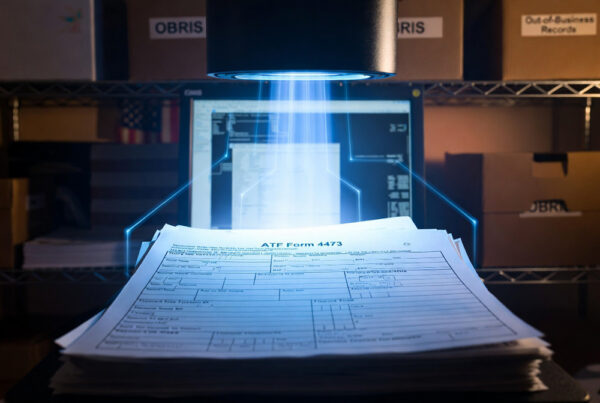
Imagine a shadowy digital vault stuffed with nearly 1 billion digitized ATF Form 4473s—those ubiquitous yellow slips every law-abiding gun buyer fills out at your local FFL. Congress slammed the door on any national gun registry back in 1986 with 18 U.S.C. § 926(a), explicitly banning the feds from consolidating these records into a searchable database. But a bombshell paper from the Firearms Research Center flips the script: thanks to cutting-edge AI, the ATF doesn’t need a clunky old search bar anymore. Modern machine learning models can infer ownership patterns straight from scanned images—spotting names, addresses, serial numbers, and purchase dates with eerie accuracy, even if the data’s siloed across thousands of dealers. It’s not a registry by the letter of the law, but by the cold logic of algorithms, it’s a de facto nightmare for privacy.
This isn’t sci-fi paranoia; it’s happening now. AI tools like optical character recognition (OCR) paired with natural language processing have already cracked worse puzzles—think how facial recognition IDs you from a blurry crowd. The paper highlights how ATF’s push to digitize 4473s under the guise of disaster recovery (post-2021 Bipartisan Safer Communities Act) creates a goldmine for inference attacks. Cross-reference a name from a traffic stop with AI-scraped 4473 images? Boom—instant ownership trail without consolidating a thing. For the 2A community, the implications are chilling: door-to-door confiscations become child’s play, suppressed buyers get flagged preemptively, and that shall not be infringed starts looking like a polite suggestion. We’ve seen the ATF twist rules before—remember the pistol brace flip-flop?—and now Big Tech’s black-box wizardry hands them a skeleton key.
Gun owners, wake up: this is the registry camel’s nose under the tent, AI edition. The Firearms Research Center isn’t crying wolf; they’re arming us with facts to fight back. Demand Congress enforce § 926(a) with teeth—no digitization loopholes, no AI carve-outs. Support state-level nullification like Montana’s anti-registry laws, and push FFLs to minimize data retention. If we let bureaucrats and bots erode the Second Amendment one inference at a time, we’ll wake up to a world where exercising your rights paints a target on your back. Stay vigilant, stay armed, and stay free.


