

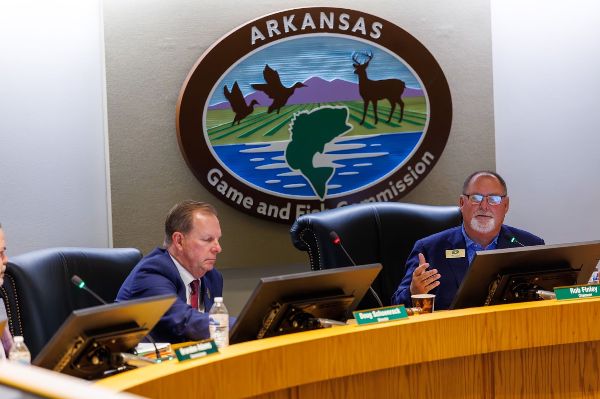
The Arkansas Game and Fish Commission’s decision to move a slice of the St. Francis Sunken Lands WMA to a drawn-permit system is more than a local crowd-control fix; it’s a textbook example of how public-land managers are quietly rationing access in the name of “quality.” By carving out roughly 1,000 acres for a seven-day-a-week lottery that hands winners three hunting buddies and a marked stake, AGFC is acknowledging that the old first-come, first-served model is collapsing under its own popularity. For Second Amendment advocates, the move is a reminder that the right to keep and bear arms is only as useful as the places we’re still allowed to exercise it—especially when those places are shrinking under pressure from non-hunters, anti-hunting litigation, and bureaucratic preference for “managed experiences” over open access.
What makes the proposal particularly telling is the scale and the permanence it signals. One thousand acres may sound modest inside a WMA that spans tens of thousands, but once a draw system is installed it rarely shrinks; it metastasizes. Other states have watched similar “pilot” programs expand until entire river bottoms or marsh complexes require advance applications months ahead of time. The practical effect is to convert a constitutional activity—hunting with firearms—into something that feels more like a state-issued privilege than a right. Pro-2A sportsmen should watch the public-comment period closely; if the commission hears only from the same small cohort that benefits from limited-draw hunts, the precedent will harden into policy that treats public land as a rationed commodity rather than a birthright secured by the Bill of Rights.
Longer term, the St. Francis experiment underscores why the firearms community must stay engaged at the state-agency level, not just in Congress or the courts. Every time a wildlife commission solves overcrowding by adding another layer of paperwork instead of expanding habitat or adjusting seasons, it chips away at the cultural expectation that law-abiding citizens can simply grab a shotgun and head to public ground. The solution isn’t to abandon regulated hunting; it’s to insist that regulation remain narrowly tailored to biology and safety rather than convenience or social engineering. Otherwise, the next “quality hunt” proposal will quietly convert another thousand acres—and another constitutional liberty—into something that must be won in a lottery instead of exercised by right.


