

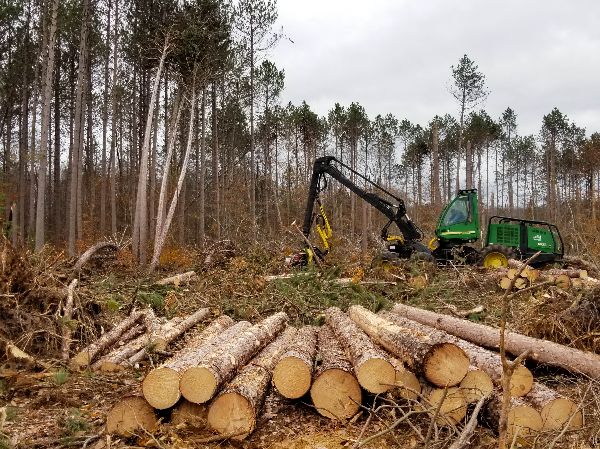
The Good Neighbor Authority has quietly rewritten the rules of federal-state cooperation in Michigan, proving that when land managers stop treating private property as an afterthought, everyone wins. For more than a decade the program has let the state step in and treat hazardous fuels on adjacent federal acres, slashing wildfire risk while keeping local crews employed and local mills supplied. The result is a living rebuttal to the old narrative that federal land policy must always be top-down and one-size-fits-all; instead, decisions are being shaped by the people who actually live next door to the forest.
For the 2A community the lesson is straightforward: healthy forests equal healthy access. When ladder fuels are reduced and roads are maintained under cooperative agreements, the same routes that let suppression crews reach a fire also let hunters, target shooters, and backcountry travelers reach public ground. Conversely, when federal acres are left choked with deadfall, closures follow—first temporary “for public safety,” then permanent. Michigan’s experiment shows that empowering states and counties to act as partners rather than supplicants keeps those gates open and keeps the multiple-use promise intact.
The broader implication is that the same principle can travel. If Congress and the Forest Service are serious about scaling what works, they should expand Good Neighbor Authority nationwide and pair it with permanent funding for road maintenance and seasonal bridge repair. That single policy shift would do more to protect both habitat and recreational access than a decade of lawsuits, while reminding Washington that the best land management still happens closest to the ground—and closest to the gun owners who use it.


